
Buy Guide
Wooden Dog House Buying Guide: Best Woods & Sizes for 2026
Oct
Wooden Dog House Buying Guide: Best Woods & Sizes for 2026
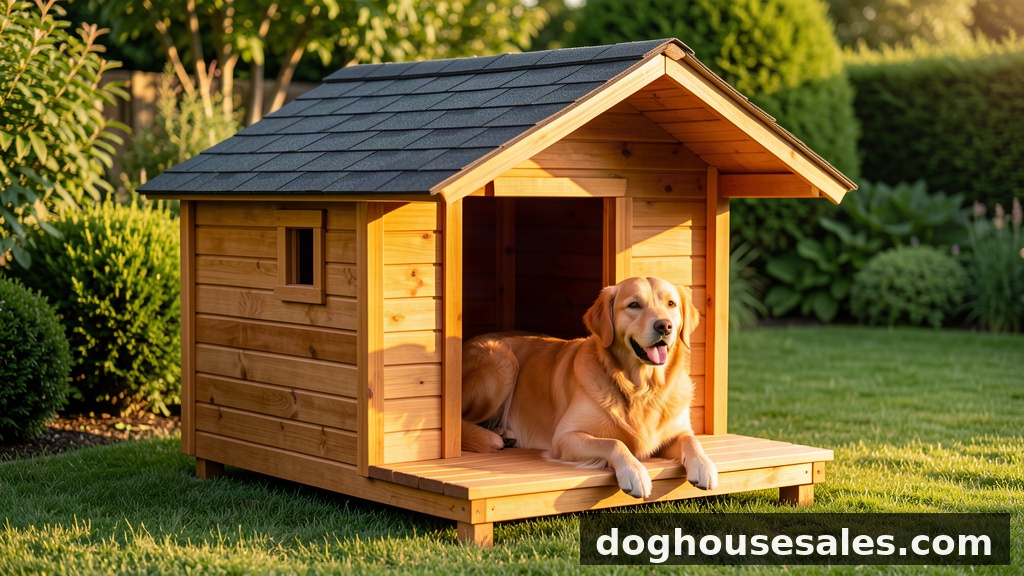
A wooden dog house is an outdoor or indoor shelter built from solid softwood or hardwood panels rather than molded plastic or metal. Wood traps air in its cellular structure, so it insulates far better than a hollow plastic shell, and it can be repaired instead of thrown away.
Choosing a wooden dog house comes down to two decisions you cannot undo later: the wood species and the interior dimensions. Pick the right species for your climate and a house that fits your dog, and the shelter will last a decade or more. Get either one wrong and you will be replacing a warped, damp box within two winters. This guide walks through which woods genuinely hold up outdoors, how to size a house properly, the features worth paying for, and the wooden models that are selling best right now.
What Makes a Wooden Dog House Worth Buying?
Wood is not automatically the best material for every yard, but it wins on three points that matter to most owners: thermal comfort, appearance, and repairability.
- Thermal comfort. A double-wall or insulated wooden shelter buffers temperature swings. Single-wall plastic heats to near-ambient in direct sun and offers almost no insulation in winter.
- Repairability. A split board or worn shingle on a wooden dog house can be unscrewed and replaced. A cracked plastic shell usually means a new unit.
- Appearance and resale. Wood fits garden and patio design in a way that a molded plastic box rarely does — see our guide to modern dog houses that actually suit an outdoor living space.
Independent wood-durability reporting is consistent on one point: untreated softwoods exposed to weather last roughly 2–5 years outdoors, while naturally rot-resistant species such as cedar and redwood commonly last 15–25 years with only annual inspection. If you only remember one thing from this guide, remember that the species choice matters more than the price tag.
The Best Woods for a Wooden Dog House
Not all lumber sold as “wood” belongs outdoors. The table below compares the species you will actually find in retail dog houses, along with the traits that determine how long the house lasts.
| Wood species | Natural rot resistance | Janka hardness | Typical outdoor life | Best for |
|---|---|---|---|---|
| Western red cedar | Excellent (natural oils) | ~350 lbf | 15–20 years | Best all-round outdoor choice in most climates |
| Redwood (heartwood) | Excellent | ~450 lbf | 20+ years | Coastal and high-rainfall regions |
| Cypress | Very good | ~510 lbf | 15–20 years | Humid Southeast; floors and framing |
| Fir / spruce / pine | Poor on its own | ~510 lbf | 5–10 years if sealed | Budget houses that you re-seal every 1–2 years |
| Pressure-treated pine (ACQ) | Good | ~510 lbf | 10–15 years | Ground-contact bases only; keep treated faces away from chewing height |
Western red cedar contains natural oils called thujaplicins that resist rot, repel insects, and suppress fungal growth without chemical treatment. That built-in protection, not its colour, is why cedar remains the most common wood in quality outdoor dog houses.
Two things to avoid outright on a wooden dog house:
- Particleboard, MDF, and OSB. These engineered panels swell and delaminate after a single wet season and they harbour mould in the seams.
- Old CCA pressure-treated lumber. Arsenic-based CCA was phased out for residential use in 2004 because of leaching risk around pets and children. Modern ACQ-treated wood is safer, but naturally rot-resistant species remain the better choice for a surface your dog will lean against.
If you live somewhere with heavy rain, salt air, or hard freezes, our breakdown of weather-resistant dog house materials by climate region narrows the choice further.
How to Size a Wooden Dog House
Oversized houses are a common mistake. A dog house that is too large holds cold air in winter and never warms up from the dog’s body heat. Use these three measurements as your working rule:
- Floor area: at least 1.25× your dog’s nose-to-tail length, measured standing.
- Door opening height: about 75% of your dog’s shoulder (withers) height — tall enough to enter upright, short enough to keep wind out.
- Interior ceiling at the peak: roughly 1.1× your dog’s shoulder height, so it can stand without crouching.
| Dog size | Typical weight | Shoulder height | Minimum interior floor |
|---|---|---|---|
| Small | up to 25 lb | 10–14 in | 24 × 18 in |
| Medium | 25–60 lb | 14–20 in | 34 × 22 in |
| Large | 60–90 lb | 20–26 in | 40 × 28 in |
| Extra large | 90–150 lb | 26–32 in | 48 × 34 in |
As a sanity check, a house marketed for a 70 lb dog should weigh noticeably more than a house for a 20 lb dog. If a large-house listing weighs around 30 lb, the panels are thin and the frame is likely to flex.
Because a raised floor eats into the stated footprint, always check the interior dimensions rather than the outer box size. Our guides to determining the perfect dog house size and indoor dog house dimensions for 2026 include fuller size charts by breed.
Features That Separate a Good Wooden Dog House From a Cheap One
Two houses can look identical in a product photo and perform completely differently. These are the details that decide whether a wooden dog house lasts three years or fifteen.
- Raised floor with adjustable feet. The single most important feature for longevity. Keeping wood off damp ground stops moisture wicking up through the grain, and adjustable feet keep the house level on uneven ground.
- Roof overhang of at least 3 inches. Short eaves let driving rain run straight down the walls and into the doorway.
- Removable or hinged roof. You cannot clean, air out, or inspect a house you cannot open.
- Ventilation at the ridge. Without a vented ridge or gable, trapped heat turns the interior into an oven in summer and condensation dampens the bedding in winter.
- A door flap or removable curtain. A plastic flap acts like a storm door and noticeably reduces wind chill inside.
- Countersunk or recessed fasteners. Protruding screws and staples cause pad injuries.
An elevated floor is the structural detail that separates a durable wooden dog house from a disposable one; ground contact is the leading cause of premature rot in budget builds, and no amount of sealant fully compensates for a base sitting directly on soil.
If you are weighing a solid wood build against a lighter alternative, our wooden dog kennel buying guide covers frame construction and hardware in more depth.
Best Wooden Dog Houses Available Now
Disclosure: this section contains affiliate links. If you buy through them, we may earn a small commission at no extra cost to you.
| Model | Material | Size (W × D × H) | Rating | Price |
|---|---|---|---|---|
| Ketive 0.47" Thick Fir Wood Dog House (Amazon’s Choice) | Fir wood, removable floor | Large, raised feet | 4.4 (55) | ~$135 |
| Petsfit Large Wooden Outdoor Dog Kennel | Fir wood, asphalt shingles | 45.6 × 30.9 × 32.1 in | 4.2 (935) | check price |
| Petsfit 45.3" Folding Dog House | Wood panels, no-tool assembly | 45.3 × 29.5 × 32.7 in | 4.5 (494) | ~$193 |
| Suumerpety Anti-Chewing Iron Frame Kennel | Wood with iron frame | 33.5 × 22 × 25.2 in | 4.2 (188) | ~$115 |
| TAKUKA Wooden Dog House with Floor | All-wood frame, rubber feet | 44 × 29 × 31 in | 3.6 (98) | ~$136 |
Two patterns stand out in the customer feedback on these listings. First, assembly dominates the positive reviews — pre-drilled panels and a lifting roof are repeatedly called out as the difference between a weekend job and an afternoon one. Second, sturdiness dominates the criticism on cheaper units, with several buyers of light frames reporting that the panels flex under a large dog. That is the sizing and panel-thickness problem described above showing up in the field.
If your dog falls in the middle of the size range, start with our medium dog house buying guide. For cold-climate buyers, a wooden shell is only half the answer — see heated dog house options for winter.
How to Set Up and Maintain a Wooden Dog House
- Site it correctly. Place the house on a gravel pad, concrete paver, or deck — never bare soil. Face the door away from prevailing wind and give the house partial shade in hot climates.
- Seal exposed seams. Run a pet-safe, water-based sealant along interior floor seams so urine and tracked-in water cannot soak into the joints.
- Add bedding that breathes. Cedar shavings or straw stay dry and let the dog burrow; foam mattresses trap moisture unless they are covered.
- Re-seal every 2–3 years. Sand lightly, then apply a non-toxic, water-based stain or sealer. Oil-based finishes off-gas for weeks and are best avoided around a dog’s nose.
- Inspect before winter. Check roof fasteners, replace rusted hardware with stainless steel, and fit a door flap. Our walkthrough on how to insulate a dog house for winter covers the insulation step in detail.
If you would rather build than buy, a simple A-frame or flat-roof design uses around 40–60 board feet of lumber for a medium house. Our step-by-step DIY wooden dog house build lists the cut sizes.
Frequently Asked Questions
Is cedar or pine better for a wooden dog house?
Cedar is better for anything left outside year-round. Its natural oils resist rot and insects without chemical treatment, so it typically lasts 15–20 years. Pine is cheaper but is not rot-resistant on its own and usually needs re-sealing every one to two years to reach even 5–10 years of service.
How big should a wooden dog house be?
Make the interior floor at least 1.25 times your dog’s nose-to-tail length, the door opening about 75% of its shoulder height, and the ceiling at the peak roughly 1.1 times shoulder height. A house that is too large stays cold in winter because the dog’s body heat cannot warm it.
Do wooden dog houses need to be treated or sealed?
Naturally rot-resistant species such as cedar and redwood can be left untreated and will weather to a silver-grey patina without losing structural integrity. Budget woods such as pine, fir, and spruce need a non-toxic water-based sealer applied at purchase and re-applied every two to three years.
How do I keep a wooden dog house from rotting?
Elevate it. A raised floor with adjustable feet on a gravel or paver base stops moisture wicking into the grain, which is the cause of most premature rot. Add a roof overhang of at least three inches, a vented ridge, and a door flap, and inspect fasteners annually.
The Bottom Line
Buy the wood first and the size second. A cedar or redwood house sized to your dog will outlast two or three budget pine units, and an elevated floor with a vented ridge is what stops it from rotting in the meantime. If you are shopping today, the Ketive fir wood model above is the strongest combination of rating and price among the wooden houses currently on sale.
Not ready to buy? Subscribe to the doghousesales.com newsletter to be notified when the next round of wooden dog house discounts goes live — there is no minimum purchase and shipping is always free.
Sources & Further Reading
- Wood durability and Janka hardness comparisons for outdoor pet housing, compiled from independent woodworking material guides.
- USDA Forest Service durability data on naturally rot-resistant species, as cited in outdoor pet-structure material reporting.
- Owner-reported failure and usability data from field audits of outdoor dog houses, as summarised in trade buying guides.
- Amazon customer review summaries for the models listed above (ratings and counts captured October 2026).
