
Buy Guide
Heated Dog House Buying Guide: Safe, Warm Winter Shelters
Sep
Heated Dog House Buying Guide: Safe, Warm Winter Shelters
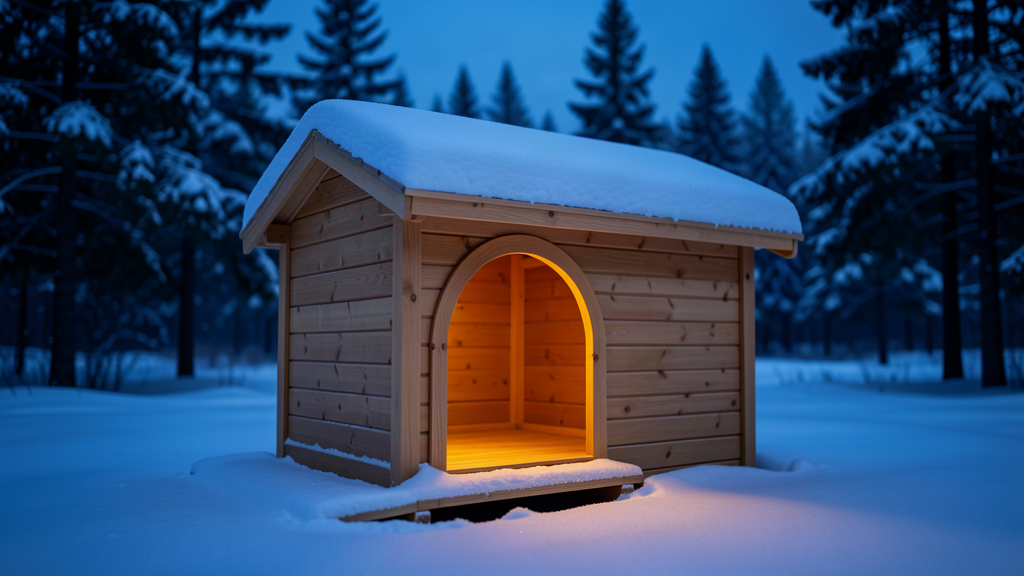
A heated dog house is an outdoor shelter with an integrated or add-on electric heating system that keeps the interior above freezing in winter. It combines insulation and weatherproofing with a thermostatically controlled warming pad, keeping dogs dry, draft-free, and comfortable through the coldest months.
If your dog sleeps outdoors, winter is not just uncomfortable, it can be genuinely dangerous. A dog that cannot get out of the wind and wet loses body heat fast, and a plain plastic shell does little to stop that. This guide walks through when a heated model makes sense, how to size one, which safety features actually matter, and what real products cost in 2026, so you can buy once and skip the returns.
Do You Actually Need a Heated Dog House?
Not every outdoor dog needs electricity. A well-built, properly insulated house handles most of the work by trapping your dog’s own body heat, and if you already own a solid shelter, adding insulation is the cheaper first step. Our full walkthrough on how to insulate a dog house for winter covers the materials and tricks that keep interior temperatures manageable without a single watt.
A heated house earns its place when insulation is not enough. That usually means one of these situations:
- Your region sees sustained lows below 20°F, especially with wind chill that cuts through even a snug shelter.
- You own a short-coated breed, a senior dog, a puppy, or a dog recovering from illness, all of which regulate heat poorly.
- The dog lives outside around the clock, not just for a few hours while you are at work.
- You want a consistent floor temperature rather than relying on bedding alone.
Veterinarians generally agree that healthy adult dogs with thick coats adapt to cold better than people assume, but they still need a dry, draft-free retreat that stays above freezing. A heating system simply removes the guesswork on the worst nights of the year.
Heated Dog House vs. Heated Pad: Know the Difference
Two product shapes dominate this category, and buyers often confuse them. The first is the all-in-one heated dog house, a complete kennel with a built-in warming pad, thermal liner, and weatherproof frame, ready to plug in and use. Brands such as GUTINNEEN sell these in sizes from roughly 39.7 x 25.5 x 32.2 inches for small to medium dogs up to large models around 35 inches long, with a thermostat-controlled heating pad and a six-sided thermal liner behind chew-proof metal framing.
The second shape is a retrofit heating pad you place inside a house you already own. The best-known example is the K&H Pet Products Lectro-Kennel line, a rigid, waterproof ABS pad rated for outdoor use that sits flat on the floor of a doghouse or kennel. It comes in three sizes that map neatly to floor space:
- Small: 12.5 x 18.5 inches, 40 watts
- Medium: 16.5 x 22.5 inches, 60 watts
- Large: 22.5 x 28.5 inches, 80 watts
K&H also makes an igloo-style variant shaped to fit inside dome houses from Dogloo and similar brands, leaving half the floor open so your dog can move on or off the warm surface as it prefers. Retrofit pads cost a fraction of a full heated kennel and are the right move when your existing house is already the correct size.
How to Size a Heated Dog House
Size matters more in a heated house than in an ordinary one, because the heating element only warms the space your dog’s body can fill. An oversized interior wastes heat, and an undersized one cramps your dog. Measure your dog from nose to the base of the tail, then add 20 to 25 percent for turning room, and use that as the minimum interior length. The doorway should sit around 75 percent of your dog’s shoulder height so the dog enters easily without the door gap letting all the warmth escape. Our detailed guide to measuring covers the same rules with breed examples if you want the full method: how to determine the perfect dog house size.
In practice, that works out to roughly:
- Small dogs up to 25 pounds: interior about 18 to 24 inches long
- Medium dogs from 25 to 60 pounds: interior about 24 to 34 inches long
- Large dogs over 60 pounds: interior about 34 to 46 inches long
Buy toward the middle of your dog’s range rather than the absolute maximum. A heated house that fits snugly keeps warmth where it belongs, at floor level, where your dog actually sleeps.
Heating Power, Thermostats, and Safety Certifications
Every serious heated product in this category uses low-wattage radiant warmth rather than blowing hot air. That is deliberate: a dog lying on a warm surface loses far less heat than one standing in warmed air, and radiant pads draw very little power. The Lectro-Kennel range runs 40 to 80 watts depending on size, which is less than a single incandescent light bulb, yet the pad surface reaches roughly 102°F once a dog lies on it, matching canine body temperature closely enough to feel like a heated floor without any burn risk.
Three features separate safe products from cheap imports:
- A real thermostat. Cheapest pads run full power until they overheat. Look for an internal preset thermostat (K&H’s turns on automatically when temperatures drop and regulates itself) or an adjustable control, like the Deluxe Lectro-Kennel, which lets you set the pad from 80 to 100°F.
- An independent safety certification. MET or UL listing means the whole product, not just the cord, passed electrical safety testing. K&H certifies complete units with MET Labs, and several pad brands now carry dual MET and UL marks. If the listing is missing, walk away.
- A chew-resistant, protected cord. Dogs chew cords, and an outdoor cord that fails is a shock or fire hazard. K&H wraps its leads in steel for roughly the first 5.5 feet, and you should still route any cord where your dog cannot reach it.
Materials and Construction: Plastic, Wood, and Heavy-Duty Frames
Housing material determines how much work your heater has to do. Plastic and resin houses, like the igloo-style domes Precision Pet Products and others make, are easy to clean and never rot, but their thin walls shed heat quickly, so they rely heavily on the pad and bedding. Wooden houses, including the multi-size options from Petsfit, insulate better and look at home in a yard, but need weatherproofing and occasional maintenance to stay sound. Heavy-duty all-in-one heated kennels wrap an insulated liner around a metal frame, trading a little charm for serious cold-weather performance.
Climate should drive the decision. If you live somewhere rainy and humid, plastic wins on maintenance. If you face deep freezes, a wooden or lined heavy-duty house with a proper pad outperforms a bare dome. Our breakdown of weather-resistant dog house materials by location helps you match the shell to your local conditions before you spend on heating.
Brands Worth Knowing
You do not need a long list here; you need brands that have earned trust in this specific category:
- K&H Pet Products built the outdoor heated pad category and still defines it. Their Lectro-Kennel pads are MET safety listed, draw 40 to 80 watts, and carry a one-year warranty. This is the default recommendation for retrofitting an existing house.
- ASL Solutions makes the Dog Palace, a modular, insulated house popular with serious dog owners and breeders. It is not heated out of the box, but its thick walls and elevated floor make it the best shell to pair with a pad, at prices that typically run from about $369 into the $600-plus range depending on size.
- GUTINNEEN sells complete heated kennels with a thermostat-controlled pad, six-sided thermal liner, and chew-proof metal frame, the closest thing to a plug-and-play heated dog house for medium and large breeds.
- Petsfit and Precision Pet Products round out the list for buyers who want wooden or plastic shells respectively and plan to add heating separately.
Budget: What a Heated Dog House Costs
Pricing splits cleanly along the two product shapes above. A quality retrofit pad such as the K&H Original Lectro-Kennel outdoor heated dog pad runs about $70 to $107 on Amazon depending on size, and it will serve any house you already own. Complete all-in-one heated kennels with pads and thermal liners generally land between $250 and $600, with the large insulated models at the top of that band. Premium insulated shells such as the Dog Palace climb past $600 before you add a heating pad, and solar-heated systems are a rare, expensive niche starting above $1,200. For most owners, a $100 pad inside a correctly sized $150 to $300 house is the honest sweet spot, and it beats replacing a whole kennel when your dog outgrows the first one.
How to Set Up a Heated Dog House Safely
Setting up is straightforward, but a few steps are non-negotiable. Follow this order:
- Place the house on flat, dry, level ground, facing away from prevailing wind, in a spot that stays clear of rain and snow splash.
- Lay the heating pad flat on the floor. Never fold it, and never set it on a damp surface.
- Run the cord through a protected route so your dog cannot reach it, and plug into an outdoor-rated GFCI outlet. If you use an extension cord, match it to the wattage and keep the connection dry.
- Plug the unit in two hours before your dog’s first cold night and let it warm up. The surface should feel gently warm, not hot, to your hand.
- Add bedding that does not trap moisture, and keep the water bowl off the heated surface so it does not get baked or spilled.
- Check the setup daily for the first week, watching for chewed cord, shifting pad, or signs your dog is avoiding the warm side.
Two common mistakes account for most problems: pairing a tiny pad with a huge house (the dog sleeps on cold plastic) and using a space heater or heat lamp inside an enclosed kennel. Radiant pads are designed for enclosed spaces; forced-air heaters and lamps are not, and they create fire and burn hazards that no responsible guide recommends.
The Bottom Line
A heated dog house is a targeted purchase, not an automatic one. Insulate first, size the shell correctly, and only then decide between a retrofit pad and a complete heated kennel. For most owners, a K&H Lectro-Kennel pad inside a well-insulated, correctly sized house delivers 90 percent of the benefit at a fraction of the price of a flagship kennel, and it transfers to your next house when the dog grows. Whatever you choose, buy from a brand that certifies its electrical safety, and you will keep your dog warm without keeping yourself up at night.
{ “@context”: “https://schema.org”, “@type”: “HowTo”, “name”: “How to Choose and Set Up a Heated Dog House”, “description”: “Steps for sizing, heating, and safely installing a heated dog house or outdoor heated pad for winter.”, “step”: [ {“@type”: “HowToStep”, “position”: 1, “name”: “Measure your dog for the right interior size”, “text”: “Measure from nose to the base of the tail, add 20 to 25 percent for turning room, and use that as the minimum interior length. Keep the doorway near 75 percent of your dog’s shoulder height to limit heat loss.”}, {“@type”: “HowToStep”, “position”: 2, “name”: “Match the heating wattage to the floor space”, “text”: “Use a 40-watt pad (12.5 x 18.5 inches) for dogs up to about 25 pounds, a 60-watt pad (16.5 x 22.5 inches) for medium dogs, and an 80-watt pad (22.5 x 28.5 inches) for large breeds.”}, {“@type”: “HowToStep”, “position”: 3, “name”: “Confirm thermostat control and safety certification”, “text”: “Choose a product with a built-in thermostat (preset or adjustable from 80 to 100 degrees F), a MET or UL safety listing for the complete unit, and a chew-resistant steel-wrapped cord.”}, {“@type”: “HowToStep”, “position”: 4, “name”: “Position the house and run power safely”, “text”: “Set the house on flat, dry, level ground facing away from the wind. Lay the pad flat inside, route the cord out of reach, and plug into an outdoor-rated GFCI outlet. Never use a space heater or heat lamp inside the kennel.”}, {“@type”: “HowToStep”, “position”: 5, “name”: “Warm up and monitor the first week”, “text”: “Plug the unit in about two hours before the first cold night; the surface should reach roughly 102 degrees F under a resting dog and feel gently warm to the hand. Check the cord and pad daily for the first week.”} ] }