
Buy Guide
Dog Kennel for Medium Dogs: Sizing & Top Picks 2026
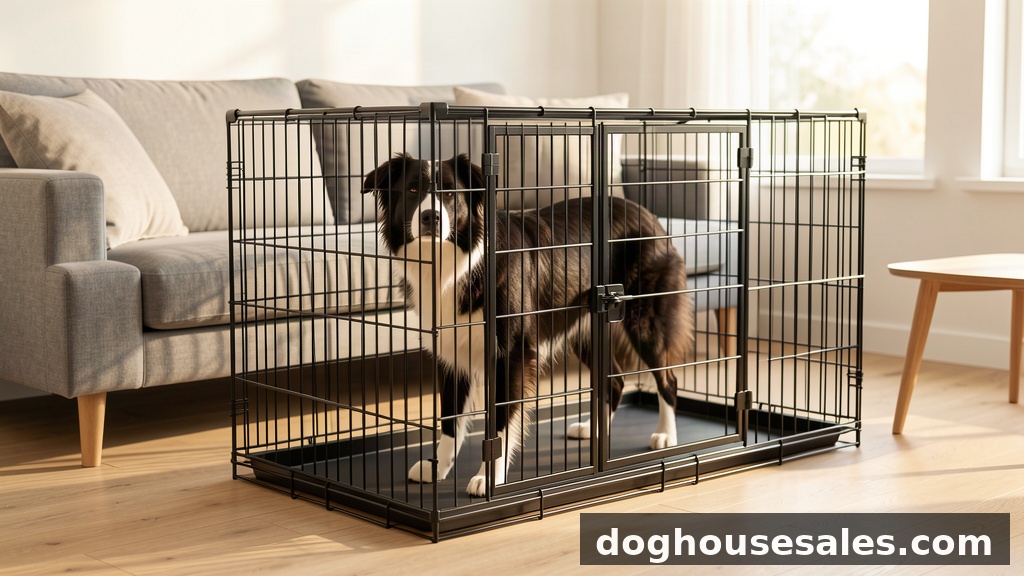
Oct
Dog Kennel for Medium Dogs: Sizing & Top Picks 2026
Definition: A dog kennel for medium dogs is an enclosed crate or pen built for breeds that reach roughly 25 to 60 pounds as adults. In practice that means a 30-inch or 36-inch indoor crate, or a covered 4 x 4 ft outdoor run, with enough room for the dog to stand, turn around, and lie down flat.
Choosing a dog kennel for medium dogs comes down to three numbers: your dog’s body length, your dog’s standing height, and the floor footprint you can actually give up. Get those wrong and you either buy a box your dog can’t stand up in, or you hand over half the living room to a dog that weighs 35 pounds.
This guide walks through the sizing math used by kennel manufacturers and animal-welfare regulators, gives you breed-by-breed crate sizes, compares the five kennel types that work for medium dogs, and points you to the two best-value picks we found on Amazon this month. Everything here is sized for the middle of the dog world — too big for a toy crate, too small for a Great Dane set-up.
What Counts as a Medium Dog?
There is no official standard, but the crate industry and veterinary bodies both converge on the same band. For kennel sizing, a medium dog is one that weighs 25 to 60 pounds and measures roughly 20 to 28 inches from chest to rump.
MidWest Homes for Pets, which manufactures the iCrate line, publishes its breed recommendations by weight rather than by name: 21–40 lb dogs fit a 30-inch crate, 41–70 lb dogs fit a 36-inch crate, and 71–90 lb dogs fit a 42-inch crate. That 30-to-36 inch range is the medium-dog kennel range.
Breeds that typically land in the middle band include Beagles, Cocker Spaniels, Whippets, Border Collies, Australian Cattle Dogs, Siberian Huskies, Australian Shepherds, and English Bulldogs. French Bulldogs and Pugs sit at the very bottom of it; Pointers and Boxers nudge at the top.
What Size Dog Kennel Does a Medium Dog Need?
The floor-space rule that commercial kennels and boarding facilities are held to comes from the USDA’s Animal Welfare Act regulations at 9 CFR 3.6(c)(1). For a single dog, the minimum floor area is calculated by taking the dog’s length in inches, adding 6 inches, and multiplying that total by itself.
Worked example: a Border Collie measuring 24 inches from the base of the tail to the tip of the nose needs (24 + 6) × (24 + 6) = 900 square inches, or about 30 x 30 inches of flat floor. That is why a 36 x 23 inch crate works beautifully for a Border Collie but feels tight for a 28-inch-long Husky.
Quotable sizing rule: A kennel is correctly sized when the dog can stand without ducking, turn around without scraping both ends, and lie fully stretched on its side — floor area at least (body length + 6 inches) squared. If any one of those three fails, the kennel is one size too small.
The three measurements to take first
- Body length: measure from the tip of the nose to the base of the tail while the dog stands. Add 2 to 4 inches of clearance.
- Standing height: measure from the floor to the top of the head, or to the ears if they stand erect. Add 2 to 4 inches.
- Shoulder width: measure across the widest part of the chest. Inside crate width should exceed this by at least 2 inches.
Standard medium-dog kennel sizes
| Crate size | Typical label | Breed weight band | Exterior dimensions (L x W x H) | Inside floor area |
|---|---|---|---|---|
| 30 inch | Medium | 21–40 lb | 30 x 19 x 21 in | ~570 sq in |
| 36 inch | Medium-Large | 41–70 lb | 36.5 x 23.25 x 24.75 in | ~849 sq in |
| 42 inch | Large | 71–90 lb | 42 x 28 x 30 in | ~1,176 sq in |
Size bands and 36-inch dimensions per MidWest Homes for Pets’ published iCrate specifications; 30- and 42-inch dimensions are the manufacturer’s listed exterior measurements for the same line.
Two practical notes. First, if your dog is within a few pounds of a band’s upper limit, size up — the manufacturer itself recommends it. Second, a 36-inch crate is not just for 41–70 lb dogs: it is also the right box for a 30 lb dog that measures 22 inches long, because length matters more than the number on the label.
Medium Dog Breeds and Their Kennel Sizes
Weight ranges below are the breed standards published by the American Kennel Club; the kennel size column maps those weights onto MidWest’s published crate bands, cross-checked against body length.
| Breed | Adult weight (AKC) | Kennel size | Why |
|---|---|---|---|
| Beagle | 20–30 lb | 30 inch | Short body, low stance |
| Cocker Spaniel | 20–30 lb | 30 inch | Compact, fits 21–40 lb band |
| French Bulldog | under 28 lb | 30 inch | Wide chest, needs width over length |
| Whippet | 25–40 lb | 30–36 inch | Long body relative to weight — size up |
| Border Collie | 30–55 lb | 36 inch | Long body, 22–24 in, needs the extra length |
| Australian Cattle Dog | 35–50 lb | 36 inch | Solid build, deep chest |
| Siberian Husky | 35–60 lb | 36 inch | Measures near the top of the 36 in length |
| Australian Shepherd | 40–65 lb | 36 inch | Right in the 41–70 lb band |
| English Bulldog | 40–55 lb | 36 inch | Low but very wide — check interior width |
Quotable breed rule: Body length, not body weight, decides kennel size. A 30-pound Whippet can need a longer crate than a 40-pound Bulldog, because the Whippet measures more inches nose-to-tail while the Bulldog simply carries more mass in a shorter frame.
Types of Kennels for Medium Dogs Compared
Five kennel formats make sense at this size. Each one solves a different problem, and the right answer depends on whether the kennel lives in your living room, your car, or your yard.
| Kennel type | Best for | Typical medium-dog cost | Weight | Watch out for |
|---|---|---|---|---|
| Folding wire crate (36 in) | Indoor crate training, travel | ~$35–$100 | 20–24 lb | Not chew-proof for determined dogs |
| Hard plastic travel kennel (36 in) | Car and air travel, den-like sleeping | ~$70–$150 | 20–25 lb | Poor ventilation in heat; limited indoor sightlines |
| Wooden furniture kennel | Doubling as an end table or side table | ~$150–$400 | Heavy (80 lb+) | Not for strong chewers; won’t fold for travel |
| Soft-sided crate (36 in) | Weekend trips, hotel stays | ~$35–$70 | 9–13 lb | Zippers and mesh are not escape-proof |
| Welded-wire outdoor run (4 x 4 ft, roofed) | Backyard containment and exercise | ~$150–$400 | Heavy | Needs shade and a raised shelter; never leave a dog in full sun |
Cost bands reflect street prices observed in October 2026 and vary by seller and finish.
Quotable material rule: For medium dogs, welded metal wire with an e-coat or powder-coat finish is the durability sweet spot — it resists rust, wipes clean, and folds flat. Wooden kennels look far better in a living room but should only be used with dogs that do not chew their enclosure.
If your yard is the containment plan rather than the living room, our heavy duty dog kennel buying guide covers gauge, weld quality, and roof design in more depth, and the review of heavy-duty kennels for strong dogs is worth reading before you buy a run big enough for a 60-pound escape artist.
Top Pick: The 36-Inch Kennel for Medium Dogs
For most medium dogs between 41 and 70 pounds, the pragmatic default is a folding wire crate with a divider panel and a leak-proof tray. The MidWest Homes for Pets 36-Inch iCrate for Medium-Large Breeds is built exactly for that band: 36.5 x 23.25 x 24.75 inches, rated for 41–70 lb dogs, 22 pounds empty, with a slide-bolt latch that now includes MidWest’s patented Paw Block and locking tips. It folds flat without tools and ships with the divider panel and tray included.
Check the MidWest 36-Inch iCrate for medium dogs on Amazon
If you want to spend less and your dog is at the lighter end of the band, the Sweetcrispy 36 Inch Dog Crate — a double-door metal kennel with a removable tray — was sitting at #5 in Amazon’s Dog Crates best-seller chart at $34.92 with a 4.5-star average across 2,391 ratings when we checked. That combination of price and volume is hard to argue with for a first crate.
Check the Sweetcrispy 36-Inch double-door dog crate on Amazon
Ratings, price, and chart position retrieved from Amazon’s Best Sellers in Dog Crates page in October 2026; prices change without notice.
How to Set Up a Medium Dog Kennel
- Measure before you buy. Take nose-to-tail length, standing height, and chest width. Compare all three against the interior dimensions, not the exterior size label.
- Place it in a low-traffic corner with two walls. Medium dogs settle faster when the kennel has a solid side and a clear line of sight to the room.
- Skip the bedding at first if your dog runs hot. Add a thin, washable mat once the dog is comfortable, and keep the pan beneath it.
- Feed meals inside with the door open. Ten minutes, twice a day, for the first week turns the kennel into a good place rather than a locked door.
- Anchor the crate if it’s on hard flooring. Rubber feet or a non-slip mat stops a 22-pound metal crate from sliding when a 60-pound dog turns around in it.
- For an outdoor run, provide shade plus a raised shelter. A wire run alone gives no protection from sun, rain, or wind. A small insulated house inside the run solves all three.
If the kennel is going outside, pair it with a proper shelter. Our medium dog house buying guide covers the size and material match for 25–60 lb dogs, and how to determine the perfect dog house size walks through the same measurement math you just used for the kennel. For dogs that need supervised outdoor time rather than permanent containment, a 6-panel play yard for dogs is a lighter option than a fixed run.
One more internal note and then the part you probably came for. If you already know you need the larger end of this range, our large dog kennel size chart continues the sizing bands past 70 pounds.
Spotted an error in our measurements or want to suggest a breed for the table? Contact the doghousesales.com team — we reply within one business day.
Frequently Asked Questions
What size kennel does a medium dog need?
A medium dog of 25 to 60 pounds needs a 30-inch or 36-inch crate. Use 30 inches for dogs up to 40 pounds and shorter body lengths, and 36 inches for dogs from 41 to 70 pounds or any dog measuring over 22 inches nose to tail. Measure body length first, because length decides the size.
Is a 36-inch crate too big for a medium dog?
No. A 36-inch crate fits a 22 to 26 inch dog without crowding, which covers most medium breeds. It is only “too big” for a puppy being house-trained, where excess floor space invites accidents. In that case use the included divider panel to shrink the living area until the dog grows into it.
Can a medium dog live in an outdoor kennel year-round?
Only with a raised, insulated shelter inside the run plus shade and wind protection. A bare wire run alone is not adequate housing in heat, rain, or cold. The outdoor run provides containment and exercise space; the shelter provides the actual living conditions the dog needs.
Wire crate or plastic kennel for a medium dog?
Choose a wire crate for indoor training, ventilation, and folding portability. Choose a hard plastic kennel for car and air travel, where it acts as a crash-tested carrier and a den-like sleep space. Many owners end up with both: wire at home, plastic for the road.
The Bottom Line
Match the kennel to the dog’s length, not the label on the box. For a 25–40 pound medium dog, a 30-inch crate is usually right; for 41–70 pounds, go 36 inches. Verify that your dog can stand, turn, and lie flat before the return window closes, and add shade and a raised shelter if the kennel lives outside.
Every kennel and dog house at doghousesales.com ships free with no minimum purchase, so you can order two sizes, keep the one that fits, and send the other back. Sign up for the newsletter while you’re there — that’s the list we email first when the outdoor kennels and wooden furniture pieces go on sale.
