
Buy Guide
Heavy Duty Dog Kennel Buying Guide: What to Look For
Aug
Heavy Duty Dog Kennel Buying Guide: What to Look For
A heavy duty dog kennel is an outdoor enclosure built from thick-gauge steel, welded wire panels, and reinforced frames designed to hold large, strong, or escape-prone dogs without bending, rusting, or breaking apart under daily use.
If you own a dog that can wreck a standard wire crate in a weekend, you already know why the phrase “heavy duty” matters. Most kennels at big box stores are built for small dogs and light use. A serious chewer, a 90-pound retriever, or a dog that digs out at 3 a.m. will find the weak points fast. A heavy duty dog kennel fixes that with thicker metal, stronger welds, and locks that actually lock. Here’s what separates a kennel that lasts a decade from one that bends in a year, and what to check before you buy.
What makes a dog kennel heavy duty?
The short answer is steel gauge, weld quality, and hardware. Marketing pages throw the words around, but three things decide whether a kennel holds up.
Steel gauge. Lower numbers mean thicker wire. Most cheap kennels use 16-gauge or thinner wire that a determined dog can push apart. Heavy duty kennels start at 14-gauge and go up to 11-gauge or 9-gauge for the serious stuff. Thicker wire resists bending and chewing.
Welded wire, not folded. Cheap panels are crimped or folded into place. A welded panel has each intersection fused, so there’s no weak seam for a paw or tooth to work on. Look for kennels that say “welded wire construction” in the specs.
Reinforced frame and doors. The frame carries the load, and the door is where most escapes happen. Heavy duty models use thicker corner posts, full-length door frames, and slide bolts or padlock loops instead of the little spring latches you find on crate doors.
Steel gauge explained
Gauge is the easiest number to compare between kennels, so it helps to know what it means. These are standard wire gauge diameters used in dog kennel construction:
| Gauge | Wire thickness | Typical use |
|---|---|---|
| 16-gauge | ~1.3 mm | Small dogs, light indoor use |
| 14-gauge | ~1.6 mm | Medium dogs, everyday outdoor kennels |
| 11-gauge | ~2.3 mm | Large breeds, chewers, escape artists |
| 9-gauge | ~2.9 mm | Extreme chewers, heavy outdoor use |
A 9-gauge wire is more than twice as thick as a 16-gauge wire. If your dog has ever bent a panel, don’t settle for anything above 11-gauge.
Metal vs wood vs plastic: which one is actually heavy duty?
Not every material called heavy duty earns the name. Here’s how the three common options compare for outdoor use.
Galvanized steel
This is the standard for heavy duty kennels. The zinc coating stops rust, and the welded wire holds up to chewing and weather. Galvanized steel kennels also handle the worst of what a strong dog can throw at them. Most of the best heavy duty dog kennels for large breeds are built from it.
Solid wood
A well-built wooden kennel looks better in a yard and insulates better in winter, but wood is not chew-proof. A determined chewer can damage corners and door frames over time. If you go wood, look for pressure-treated lumber and metal hardware at every joint.
Plastic and resin
Fine for travel and light use, but a plastic kennel is not heavy duty. Large dogs can crack the shell, and the doors are usually the weak point. Skip plastic if durability is your main concern.
How big should a heavy duty kennel be?
Size matters more than material. A kennel that’s too small will stress your dog out and encourage chewing and escape attempts. A kennel that’s too big is harder to keep warm and takes up your whole yard.
Measure your dog from nose to tail base and from the floor to the top of the head. The kennel should be long enough for your dog to stretch out fully, tall enough to stand and turn around, and wide enough to move freely. If you’re between sizes, size up rather than down, especially for outdoor kennels where your dog will spend hours at a time. Our guide on how to determine the perfect dog house size walks through the measurements in detail.
Features worth paying for
Beyond gauge and material, a few details separate a good heavy duty kennel from a great one:
- Double-locking doors. Two latches or a padlock loop beats a single spring latch every time. Escape artists learn one lock fast.
- Dig guards. For dogs that dig, a bottom frame or buried skirting stops the hole-from-under escape route.
- A roof. Rain, snow, and sun damage dogs over time. A galvanized or insulated roof adds years of comfort and keeps the kennel dry.
- Removable tray or floor. Cleaning a kennel is a twice-a-week job with a big dog. A slide-out tray makes it a five-minute task instead of a wrestling match.
- Rust-resistant coating. Powder-coated or galvanized finishes last through years of weather. Bare steel rusts within one wet season.
A heavy duty option worth checking out
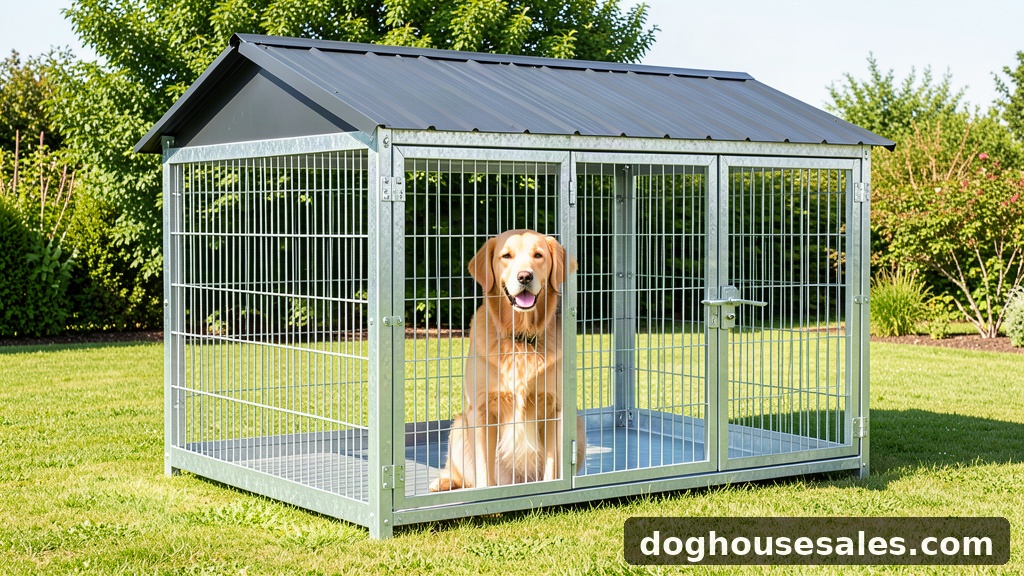
For an off-the-shelf example, the Petony Large Outdoor Dog Enclosure is a good benchmark for what a heavy duty kennel should include. It’s a galvanized steel dog cage with a roof, double doors, and enough room for a large breed, priced around $150 on Amazon. It’s not the cheapest kennel you can buy, but it shows the material and build quality you should be comparing everything else against.
If you’re comparing several models, our roundup of the best heavy duty dog kennels for large and strong dogs breaks down the top options side by side.
Frequently asked questions
Is a heavy duty dog kennel worth the extra money?
If you have a large dog, a chewer, or a dog that has escaped a standard kennel before, yes. The price difference between a $70 crate and a $150 heavy duty kennel is small compared to the cost of replacing bent panels or losing a dog. For small, calm dogs, a standard kennel is usually fine.
What gauge steel is best for a dog kennel?
For most dogs, 14-gauge is the minimum to call a kennel heavy duty. For large breeds, chewers, or escape artists, go with 11-gauge or thicker. Thicker wire costs more and weighs more, but it’s the single most important factor in how long the kennel lasts.
Can a heavy duty kennel stop an escape artist?
Usually, but not always. A thick-gauge welded kennel with double locks and a dig guard stops most escape attempts. A determined dog can still find a weak point over time, so check the kennel regularly for bent wire, loose welds, or damaged latches.
How long does a galvanized steel kennel last outdoors?
A well-made galvanized kennel lasts 10 years or more with basic maintenance. The zinc coating protects the steel from rust as long as it isn’t scratched through. Rinse it occasionally and touch up any deep scratches with rust-resistant paint.
Do I need a roof on an outdoor kennel?
If your dog spends more than a couple of hours outside, yes. The roof protects against rain and sun, keeps the interior cooler in summer, and gives your dog a dry place to rest. Many heavy duty kennels sell roof panels separately, so check what’s included before you buy.
Bottom line
Buy the thickest gauge you can afford, make sure the wire is welded, check the door hardware, and size the kennel to your dog, not your budget. A heavy duty dog kennel is a one-time purchase that saves you from buying the same cage twice. If you want to skip the research and see what’s selling right now, browse the metal dog house collection in our shop for solidly built options, and compare prices before committing.
