
Buy Guide
Outdoor Dog House Buying Guide: Size, Material & Placement
Oct
Outdoor Dog House Buying Guide: Size, Material & Placement
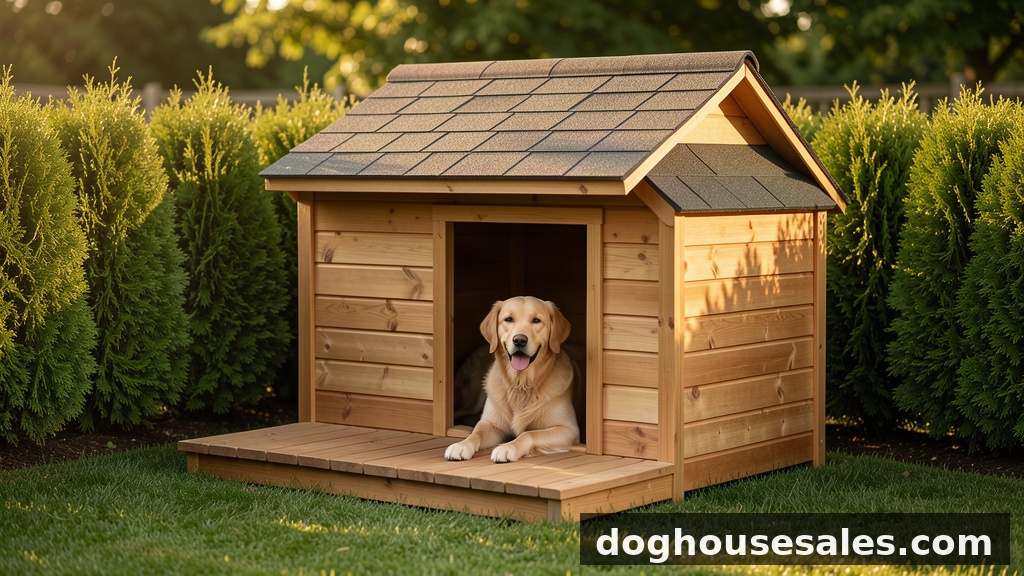
Definition: An outdoor dog house is a weather-resistant shelter that keeps a dog dry, shaded, and insulated from ground moisture. Most models pair a sloped roof and an offset doorway with a raised floor, and the interior is sized so the dog can stand, turn, and lie down comfortably.
An outdoor dog house earns its place in the yard the first time a storm rolls through and your dog has somewhere dry to go. The problem is that “weatherproof” gets printed on nearly every box, and it means something very different on a $90 fir cabin than on a $260 model with a foam-lined floor and a metal frame. This guide covers the three decisions that actually change how well a house performs — size, material, and placement — then lists current picks with their listed dimensions, prices, and ratings.
If you only read one section, make it placement. A well-built house in the wrong spot becomes a damp box; a mid-priced house in the right spot stays dry and usable all year.
What an Outdoor Dog House Has to Do
An indoor dog house has one job: give the dog a den. An outdoor house has to handle water, wind, sun, and the ground underneath it at the same time.
- Keep rain out. Roof pitch, roof overhang, and a doorway that sits on the sheltered side of the structure all matter more than wall thickness.
- Block wind. An offset or recessed doorway forces moving air to turn a corner before it reaches the sleeping area.
- Lift the dog off the ground. A raised floor keeps ground moisture from wicking into bedding, which is the single most common cause of a “smelly” dog house.
- Manage temperature. Cross-ventilation for summer, insulation and bedding for winter.
Veterinary guidance on cold-weather care, including the AVMA’s cold-weather animal care resource, is consistent: dogs housed outdoors need shelter that blocks wind and rain and buffers temperature extremes, and that shelter must be appropriately sized for the individual dog.
Sizing: The Stand, Turn, Lie Rule
Sizing follows the stand-turn-lie rule: measure your dog from nose to base of tail and add about 12 inches for the minimum interior length, then add 2 to 4 inches of headroom above the dog’s standing height. The doorway should be roughly 75% of the dog’s shoulder height — big enough to walk through, small enough to hold warmth in [needs source].
Resist the urge to buy oversized. A dog house works partly by trapping the dog’s own body heat, so an interior that is far larger than the dog stays close to the outside air temperature on cold nights. Your dog should be able to stand without ducking, turn a full circle, and stretch out flat — and not much more than that [needs source].
Working minimums by dog size
| Dog size | Typical weight | Min. interior length | Min. interior height | Door opening |
|---|---|---|---|---|
| Small | Under 25 lb (11 kg) | 24 in (61 cm) | 16 in (41 cm) | 12 in H (30 cm) |
| Medium | 25–50 lb (11–23 kg) | 30 in (76 cm) | 20 in (51 cm) | 16 in H (41 cm) |
| Large | 50–90 lb (23–41 kg) | 40 in (102 cm) | 28 in (71 cm) | 20 in H (51 cm) |
| Extra large | 90–130 lb (41–59 kg) | 44 in (112 cm) | 32 in (81 cm) | 22 in H (56 cm) |
| Giant | 130 lb+ (59 kg+) | 50 in (127 cm) | 38 in (97 cm) | 24 in H (61 cm) |
Working minimums derived from the nose-to-tail + 12 in rule. Measure your own dog rather than relying on breed averages. [needs source]
Two walkthroughs worth reading before you order: how to determine the perfect dog house size, and our medium dog house buying guide if your dog lands in the 25–50 lb range.
Materials: Wood, Plastic, Resin, and Fabric Compared
Material decides how the house handles moisture, how much maintenance it needs, and whether it survives a determined chewer. Here is how the four common options behave outdoors.
| Material | Strengths outdoors | Weak points | Maintenance |
|---|---|---|---|
| Solid wood (cedar, fir, pine) | Natural insulation, looks like a cabin, easy to repair | Needs resealing, expandable chewer target, untreated pine rots fast | Reseal every 1–2 years |
| Polypropylene (PP) plastic | Affordable, hose-clean, UV-resistant, light to move | Little insulation, can get brittle in deep cold | Rinse and dry |
| Rotomolded resin / foam-core | Thick double walls, best impact resistance, holds temperature | Heaviest and most expensive, limited sizes | Rinse and dry |
| Fabric / PVC canopy | Cheap, portable, great shade and airflow | Minimal insulation, not storm-proof | Re-tension and replace covers |
Cedar is the most commonly recommended outdoor dog house wood because its natural oils resist rot and insects without chemical treatment; pine and fir cost less but need resealing every 1–2 years, and pressure-treated lumber should be avoided in any area a dog can chew.
Cedar, a common outdoor dog house wood, provides roughly R-1.4 per inch of thickness, while foam-core insulated walls are commonly specified above R-3.5 per inch. That gap is why a wooden cabin feels warm in winter and an insulated panel model costs more. [needs source]
For climate-specific material advice, see our breakdown of weather-resistant dog house materials by location, and for a deeper dive on lumber grades and finishes read the wooden dog house buying guide. If you already know you want timber, the solid wood dog house collection is where our own stock sits.
Placement: The Step Most Owners Skip
Placement is free, and it does more for interior dryness than any upgrade you can buy.
- Shade first, sun second. In warm climates, put the house where afternoon shade falls and face the door away from the low western sun.
- Face the door away from prevailing wind and rain. In most of the U.S. that means the door avoids the east and southeast. An offset or gable design gives you a built-in windbreak.
- Elevate it. A raised floor at least 2 inches off the ground keeps ground moisture out of the bedding and lets air move underneath.
- Check drainage. Never place a house at the bottom of a slope, next to a downspout, or on ground that puddles.
- Give the dog a choice. Pair the house with a shaded run so the dog can move between shelter and open air — our outdoor pet pens guide covers how to lay that out.
Winter and Summer Upgrades
Two small additions extend a house across seasons: an insulating liner or door flap for cold months, and an adjustable vent or removable roof panel for hot ones. In our experience the vents and removable floors are the features owners use most, because they make cleaning fast enough that it actually happens.
If your climate brings sustained freezing temperatures, add bedding that traps heat and consider a heated pad or a dedicated heated unit — see the heated dog house buying guide for safe power options and our step-by-step on how to insulate a dog house for winter.
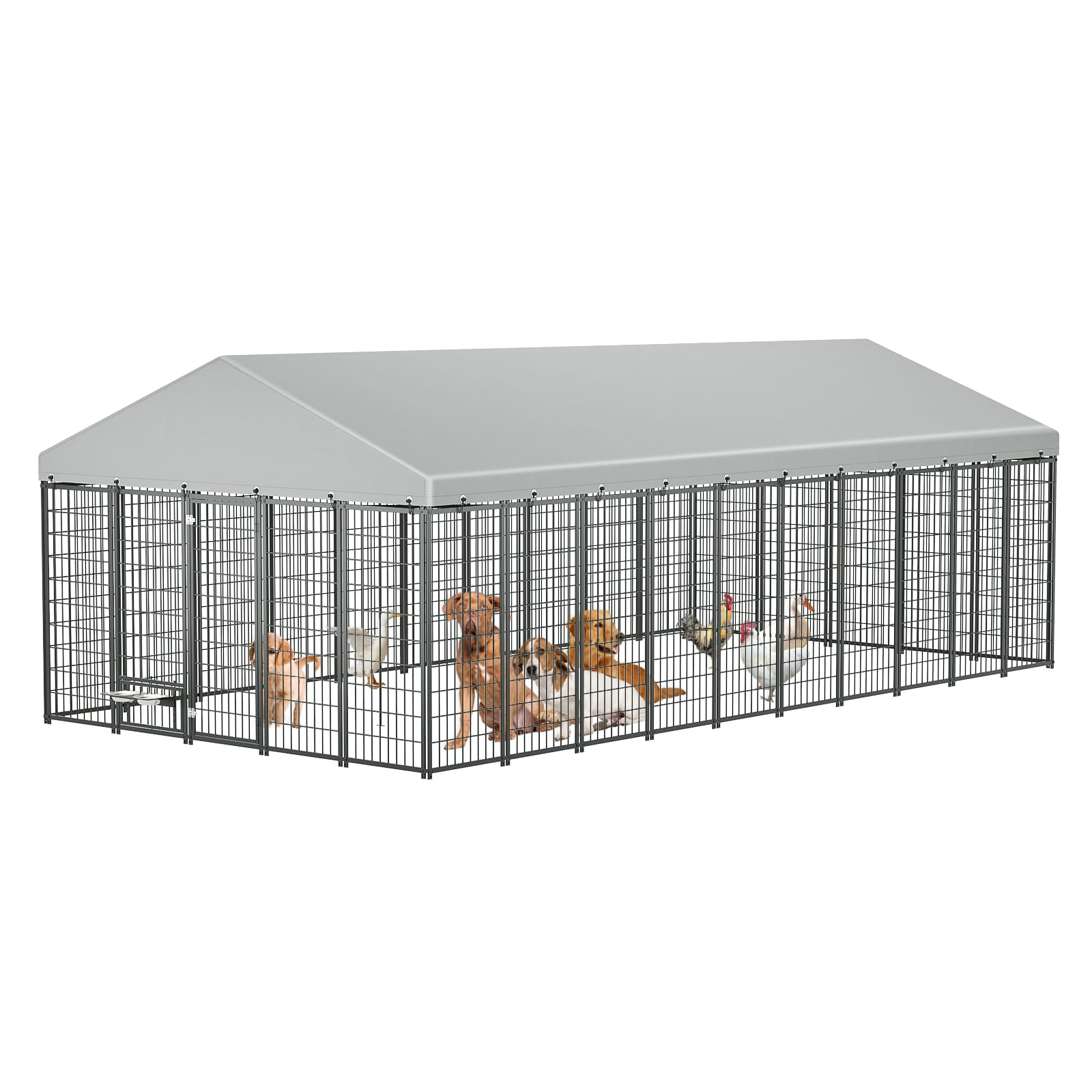
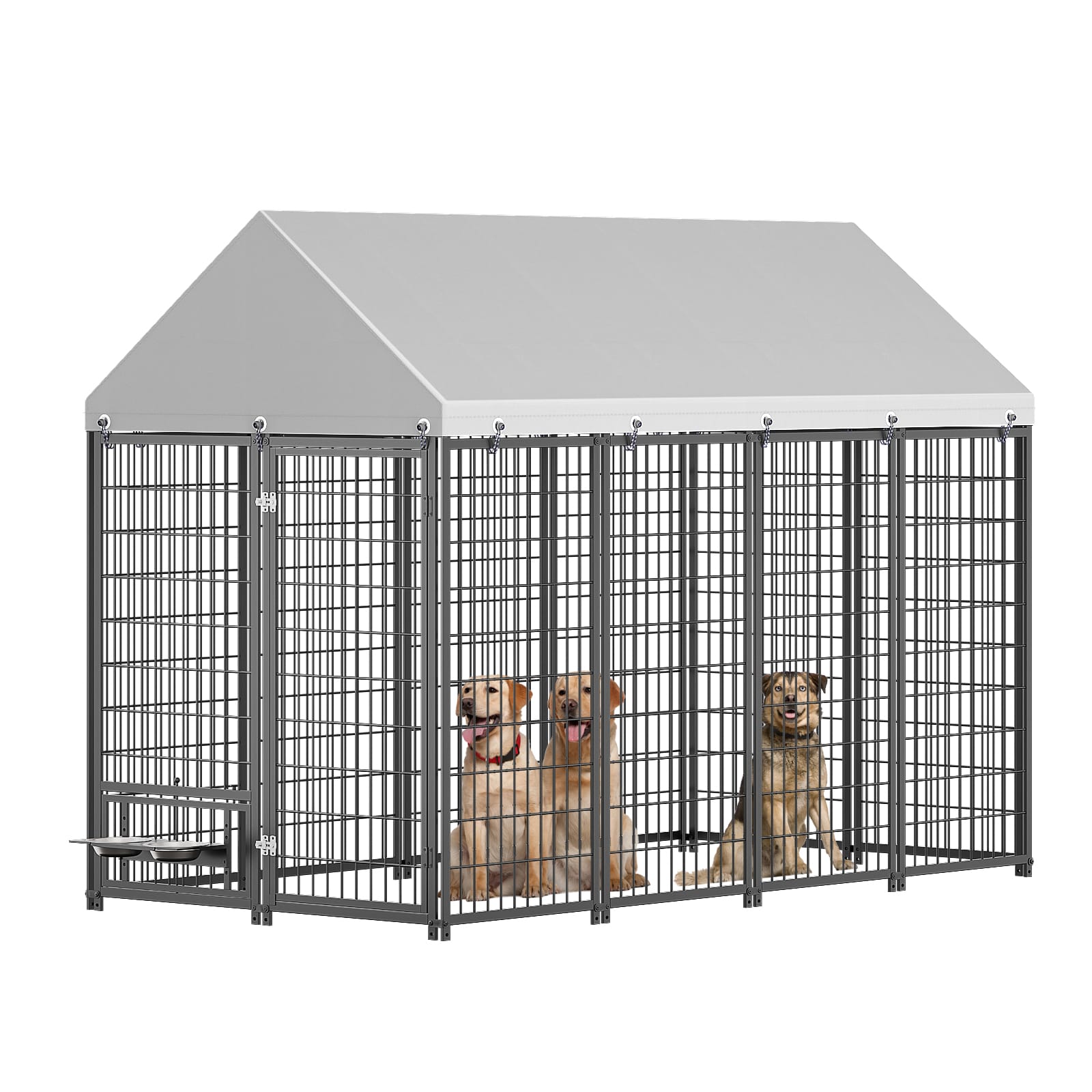
Currently discounted on our own shelves: the Large Dog Kennel Outdoor is down from $186.07 to $141.41, and the Metal Animal Hutch with Roof Cover is reduced from $596.09 to $520.19. Larger runs with shade canopies are in the large and big dog section. Every order ships free with no minimum purchase.
Top Outdoor Dog House Picks for 2026
These are the models we keep hearing about in owner reviews, with the dimensions and prices shown on their current retail listings. Ratings and prices are as listed at the time of writing and do change.
1. Precision Pet Extreme Outback Log Cabin Dog House, Large
- Listed footprint: 45.5 × 26.5 × 32.8 in
- Construction: solid wood with stainless-steel hardware, sealed coating, slanted asphalt roof, raised floor, offset doorway
- Reviews: 4.1 out of 5 across roughly 4,600 ratings on Amazon
The classic outdoor shelter: an asphalt roof and a raised floor do the weather work, and the offset entrance becomes an interior windbreak. Check the Precision Pet Log Cabin on Amazon.
2. Lovinhut Extra Large Insulated Outdoor Dog House
- Listed size: 59 × 35 × 35 in
- Construction: fir wood with a chew-resistant iron frame, full-sided foam insulation, 220 lb rated load
- Reviews: 4.3 out of 5 from about 55 ratings; listed at $259.99
The pick for cold climates and strong chewers. Insulation is built into the walls rather than added later, and the frame is the reason it survives a dog that treats furniture as a chew toy. Check the Lovinhut insulated house on Amazon.
3. Gowoodhut Large Outdoor Weatherproof XL Wooden Dog House
- Listed size: 55.1 × 33.1 × 34.8 in
- Construction: waterproof-painted fir with a metal frame, asphalt roof, PVC door curtain, adjustable vent window
- Features: openable roof, removable floor, pre-drilled panels; listed at $199.99
A good middleweight: real wood, a metal frame, and a vent window you can open in summer and close in winter. The openable roof makes monthly cleaning a five-minute job. Check the Gowoodhut XL house on Amazon.
4. Merax 60.2 in Wooden Dog House with Insulated Liner
- Listed size: 60.2 × 44 × 40 in, rated for dogs up to 120 lb
- Construction: pine wood, asphalt roof, raised 1.96 in floor, porch, PVC door curtain
- Insulation: 6-sided removable, washable liner with 0.6 in sponge and polyester fiber
The largest mainstream option on this list, and the only one that ships with a removable insulated liner as standard. Check the Merax insulated dog house on Amazon.
5. FunXplore Outdoor Wooden Dog House, 43.3 in
- Listed size: 43.3 × 26.4 × 29.6 in, 220 lb rated load
- Construction: iron frame on all sides, slanted roof, elevated waterproof base, side window
- Reviews: 4.4 out of 5 from about 57 ratings; listed at $99.99
The value pick for a medium-to-large dog that has already destroyed one plastic house. Check the FunXplore dog house on Amazon.
6. Zooba 36 in Elevated Dog House
- Listed size: 36.2 × 30.1 × 44.1 in
- Construction: steel frame with 600D PVC Oxford fabric and a Textilene bed platform
- Reviews: 4.3 out of 5 from about 408 ratings; listed at $84.99
Not a winter shelter — a shade and airflow solution for hot, dry climates, and it folds down for travel. Check the Zooba elevated house on Amazon.
Setup and Maintenance Checklist
- Measure your dog, not the breed chart. Nose to tail base, shoulder height, and shoulder width.
- Check the footprint against your intended spot before assembly, including clearance for the roof overhang.
- Level and elevate the base. A 2-inch gap under the floor keeps ground moisture out; shim the legs on uneven ground.
- Seal or treat wood before the first rain. Use a pet-safe, water-based sealant and never treat interior surfaces with stain.
- Add bedding that traps heat, not moisture. Straw, cedar shavings, or a washable orthopedic pad — not an old blanket that soaks through.
- Sweep and air out monthly. A removable floor or hinged roof makes this a two-minute task.
- Re-check fasteners each season. Tighten screws and bolts before winter and after any storm.
- Inspect inside after heavy rain for the first month. Dampness at that stage is a placement problem, not a manufacturing one.
Frequently Asked Questions
How big should an outdoor dog house be?
Measure from your dog’s nose to the base of the tail and add about 12 inches for the minimum interior length, then allow 2 to 4 inches of headroom above standing height. Add roughly 50% more length for two dogs. Slightly snug beats oversized: an interior far larger than the dog cannot hold body heat.
Is wood or plastic better for an outdoor dog house?
Wood insulates better and looks better, but needs resealing every one to two years and can attract chewers. Plastic and resin stay dry with almost no maintenance and resist rot, but they hold very little warmth. In freezing climates, choose insulated wood or a foam-core resin model rather than thin plastic.
Where should I put an outdoor dog house?
Pick level ground with afternoon shade, face the door away from prevailing wind and rain, and keep the house out of drainage paths and away from downspouts. Elevate the floor at least 2 inches and leave room around the house so air can move on all sides. Never set it in a low spot that puddles.
Can a dog stay in an outdoor dog house all day?
In mild weather, yes — provided the house is shaded, dry, has fresh water nearby, and the dog can leave it. Extreme heat above 90°F (32°C) and hard freezes below 20°F (-7°C) are different situations, and both call for extra ventilation or insulation and shorter outdoor stretches. Follow your veterinarian’s advice for your breed.
Do I need to insulate an outdoor dog house?
You do if your area regularly drops below freezing at night. Insulation comes built in (foam-core walls) or as an add-on liner, and either way it works best combined with bedding, a door flap, and a house that is sized snugly for your dog rather than oversized.
Bottom Line
Buy the house your dog fits, put it where the weather does not win, and lift it off the ground. Those three decisions matter more than brand names or premium add-ons. If you want to skip the research, start with a sealed wooden cabin with an asphalt roof and raised floor for temperate climates, or an insulated model with a metal frame if your winters are real winter.
Every order from doghousesales.com ships free with no minimum purchase, and our team answers questions within one business day. Questions or corrections to this guide? Email support@doghousesales.com — we update this page when prices or product details change.
Some links in this guide are affiliate links, including Amazon links tagged to our store. If you buy through them we may earn a commission at no extra cost to you. Prices, dimensions, and ratings are as listed at the time of writing.
Don’t miss a sale: sign up for our newsletter to hear about new arrivals and discounts on beds, kennels, and outdoor shelters before they sell out.
