
Buy Guide
How to Insulate a Plastic Dog House for Winter
Oct
How to Insulate a Plastic Dog House for Winter
Insulating a plastic dog house means adding a thermal barrier to a single-wall molded shell — rigid foam board cut to fit, a reflective liner, or an aftermarket insulated insert. The retrofit pairs that barrier with a door flap, a raised base, and dry bedding.
If your dog sleeps in a molded plastic dog house, winter insulation works differently than it does in a wooden shelter. There is no cavity to fill, the walls cannot take a plywood liner, and the round or tunnel-shaped interior makes board fitting fiddly. What matters more on a plastic house is stopping wind at the opening, lifting the shell off cold ground, and keeping bedding dry — the three things that decide whether your dog stays warm in a house that has no insulation of its own. This guide covers the retrofit step by step, the materials that actually work on a molded shell, and the temperature thresholds worth checking before you rely on any shelter.
What You Are Working With
A molded plastic dog house is a single wall of polyethylene or similar resin. That construction resists rot, water, and insects — the reason plastic houses remain popular in wet climates — but the plastic itself contributes effectively nothing in thermal resistance, unlike a hollow wall you could fill with foam. Plastic also has one behavior worth planning around: it traps humidity. A dog’s breath and body moisture condense on the cool inner surface, run down the walls, and soak the bedding. A house that feels warm at bedtime can be damp by 2 a.m., which is why ventilation and dry bedding matter on a plastic house more than the insulation layer itself.
Materials That Work on a Plastic Shell
Compare materials by their published R-value per inch, and check the label on the product you buy rather than trusting a summary table.
| Material | Installed R-value (published) | How it fits a plastic house | Watch out for |
|---|---|---|---|
| Extruded polystyrene (XPS) foam board, 1 in | About R-5 per inch | Cut into panels that friction-fit against the inner walls and floor | Must be covered or boxed — dogs chew exposed foam |
| Expanded polystyrene (EPS) board, 1 in | About R-4 per inch | Best for flat-floored square plastic houses; crumbles on curves | Seal cut edges; it sheds beads |
| Reflective bubble foil | Roughly R-1 to R-3 per layer as installed, depending on air gaps | Wraps the outside or lines a curved interior without losing space | Underperforms foam board without an air gap |
| Aftermarket insulated liner or insert | Varies by product | Purpose-made for common plastic house shapes | Confirm it covers floor and roof, not just walls |
| Straw or cedar bedding | Not rated; adds loft and a dry layer | The floor layer inside the sleeping area | Blankets hold moisture once damp; replace bedding when wet |
| Rigid foam base or pallet | Adds separation, not a rating | Lifts the shell off frozen ground | Keep it level and clear of standing water |
Before You Insulate: Is the Dog Safe Outside at All?
Insulation changes comfort; it does not make a plastic house safe in extreme cold. Two veterinary reference points should set the limits.
Cold generally stops being comfortable for most dogs below about 45°F, small breeds, thin-coated dogs, and very young, old, or sick dogs are at risk below 32°F, and below 20°F every dog can develop hypothermia or frostbite during extended exposure — per PetMD’s cold-weather guidance.
The AVMA’s position: cats and dogs should be kept inside during cold weather, no pet should be left outside for long periods in below-freezing temperatures, and where a dog must be outside the advice is to provide a warm, solid shelter that blocks the wind.
Read together, those two sources describe the right use of a retrofitted plastic house: supervised daytime outdoor time and short stays, not a hard-freeze overnight. A plastic house is also the weakest starting point of the common shelter types, because a molded shell has no wall cavity and no floor structure to work with.
Step-by-Step: Insulating a Plastic Dog House
- Wash and dry the shell. Scrub the interior with mild soap, rinse, and let it dry completely. Insulation glued or fitted over a damp surface traps mold between the layers.
- Lift it off the ground. Set the house on a rigid foam base, two boards, or a pallet. Ground contact is the largest single heat loss on a plastic house, and it costs almost nothing to fix.
- Cut the floor layer first. A 1-inch foam panel trimmed to the floor footprint, covered with a thin hardboard or a dense mat, is the highest-value single addition. Floor insulation is the step most people skip.
- Fit wall panels. On a square plastic house, cut foam to friction-fit the inner walls. On a round or igloo shape, cut the board into a curve-hugging crescent or use a flexible reflective liner instead — do not force a flat panel, because gaps defeat it.
- Cover every foam surface the dog can reach. Exposed foam is a chew target and sheds. A thin plywood facing, a hardboard sheet, or a fabric-covered panel solves it.
- Deal with the roof. Fit the same board to the underside of the roof if you can reach it, or lay a second shell, an insulated topper, or a shaded panel over the top. Heat rises; an uninsulated roof radiates it away.
- Add a door flap or baffle. This is the single biggest improvement on any dog house and the easiest on a plastic one: a vinyl or canvas flap hung over the opening, or an interior baffle, blocks the wind that otherwise strips the warm air out. Do not seal the opening with rigid plastic — the dog still needs to pass, and the house still needs to breathe.
- Keep one small vent. Drill or open the vent a molded house already provides, high on the sheltered side. Trapped moisture, not cold air, is what ruins a plastic house.
- Add dry bedding and check it daily. Cedar shavings or straw over the insulated floor give the dog something to nest into. Damp bedding actively chills a dog, so replace it rather than airing it out.
The Sizing Mistake That Undoes the Work
A house that is too large for the dog stays cold no matter how much board you fit into it, because your dog’s body heat has more air to warm. The industry sizing rule is the same one used for crates: the interior should let the dog stand without stooping, sit without touching the roof, turn around completely, and lie down stretched out, with about 2–4 inches of clearance and no more. If the plastic house is oversized, partition the sleeping area with a foam-filled divider or add an inner box rather than adding more insulation to the walls.
Common Mistakes on Plastic Houses
- Sealing the house airtight. Plastic already holds condensation; blocking the vent guarantees damp bedding.
- Lining only the walls. Floor and roof matter as much, and the floor is usually the easiest win.
- Leaving foam exposed. It gets chewed and it crumbles; always face it.
- Using an unthermostatted heat source. If you add power, use a thermostatically controlled pet pad rated for the enclosure, keep cords out of reach, and never use an unvented fuel heater.
- Ignoring the doorway. A flap costs a few dollars and outperforms an extra inch of wall board.
When to Replace the Plastic House Instead
A retrofit has a ceiling. If the shell is cracked, if the interior is so large it cannot be partitioned sensibly, or if you want the house to work in a colder climate than a single-wall shell can manage, the more efficient spend is a solid wood house with a raised floor, panel joints you can seal, and a roof overhang — all features that accept foam board properly and hold heat instead of condensing it.
- deluxe wooden dog house — solid wood shell, boxy interior, accepts cut foam on all six surfaces.
- medium wooden outdoor dog house — the right footprint for one medium dog, which is what the sizing rule calls for.
- 48-inch wooden dog house with porch — the porch shades the entry, the hottest and coldest surface on any house.
- 60.2-inch large outdoor dog house — large-breed interior volume without a custom build.
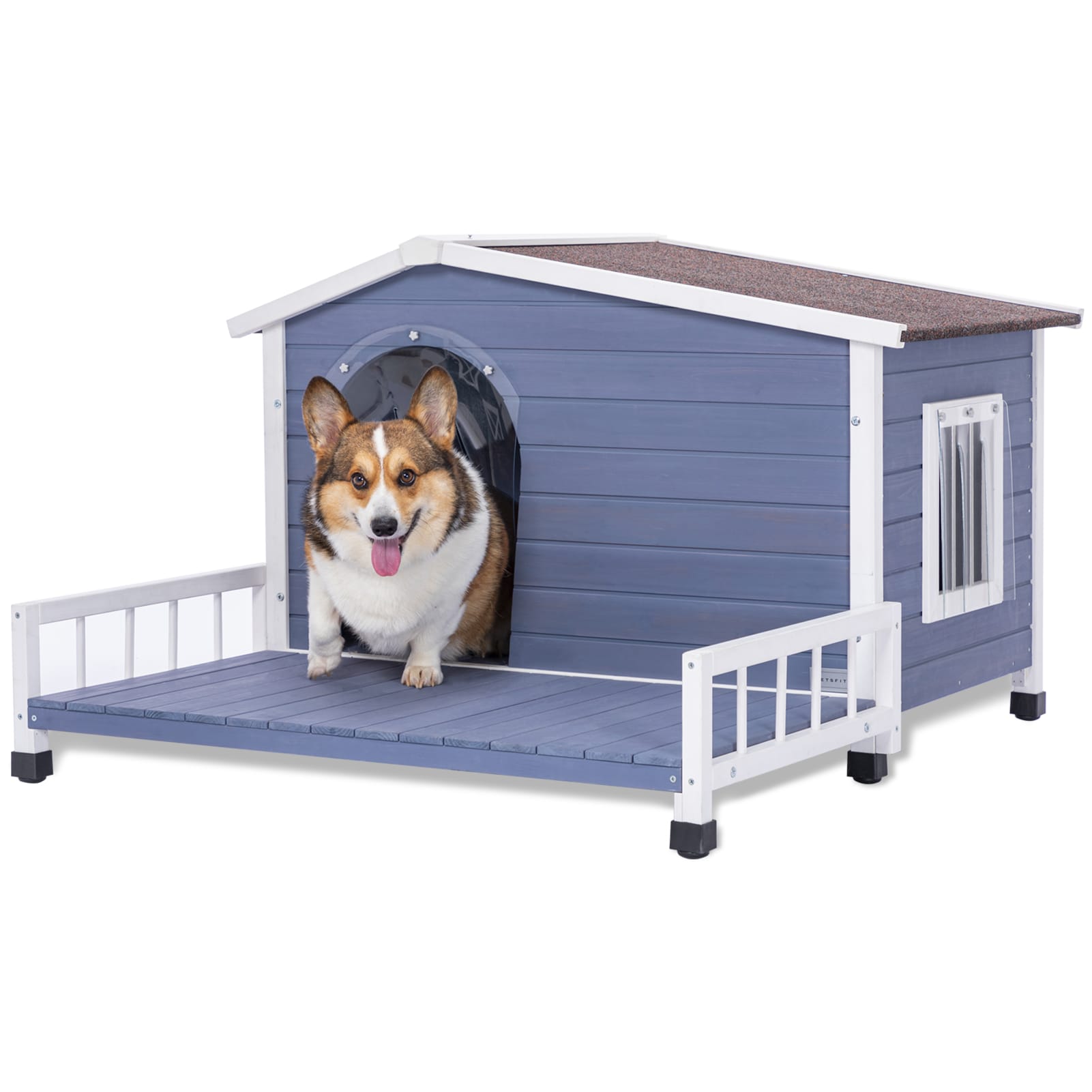
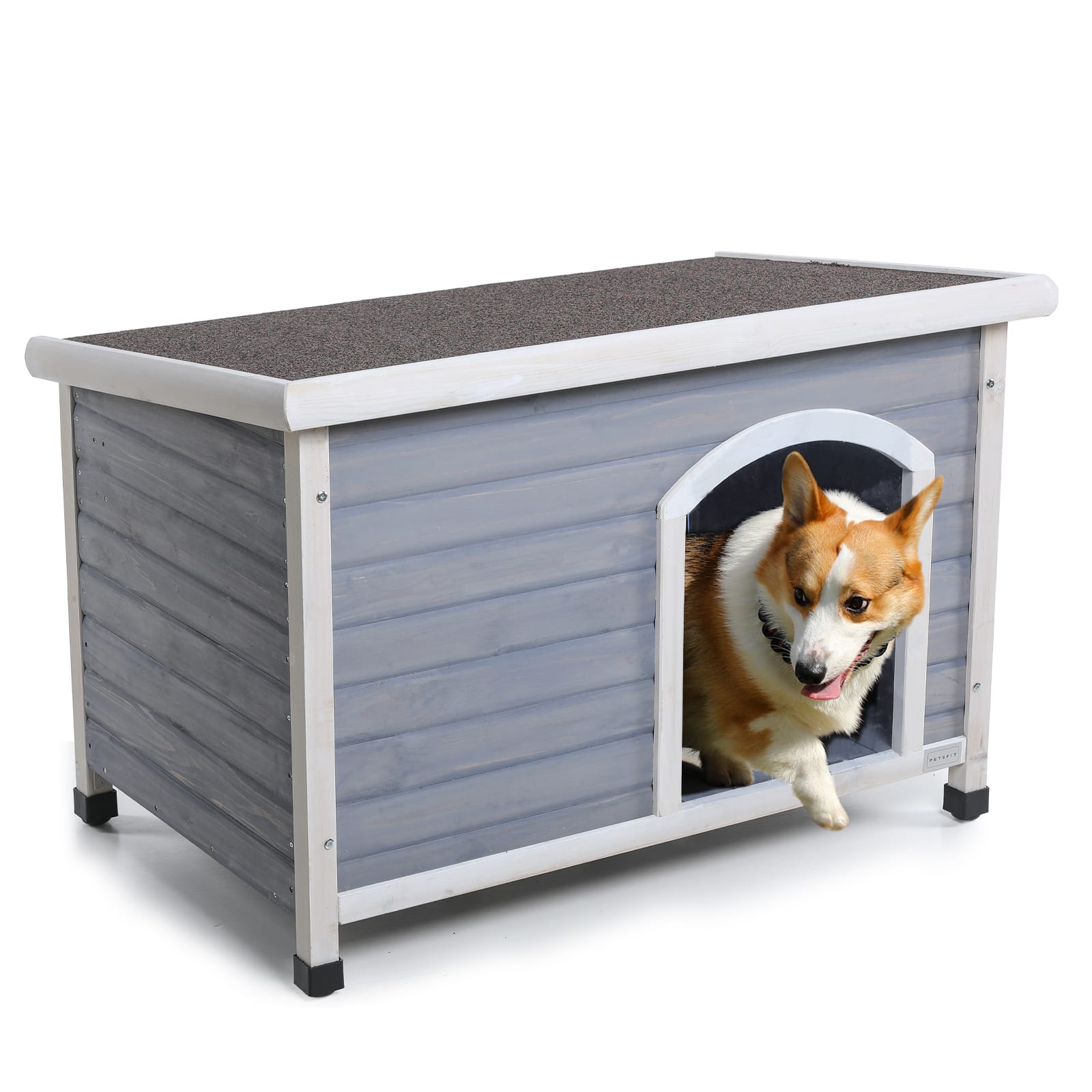
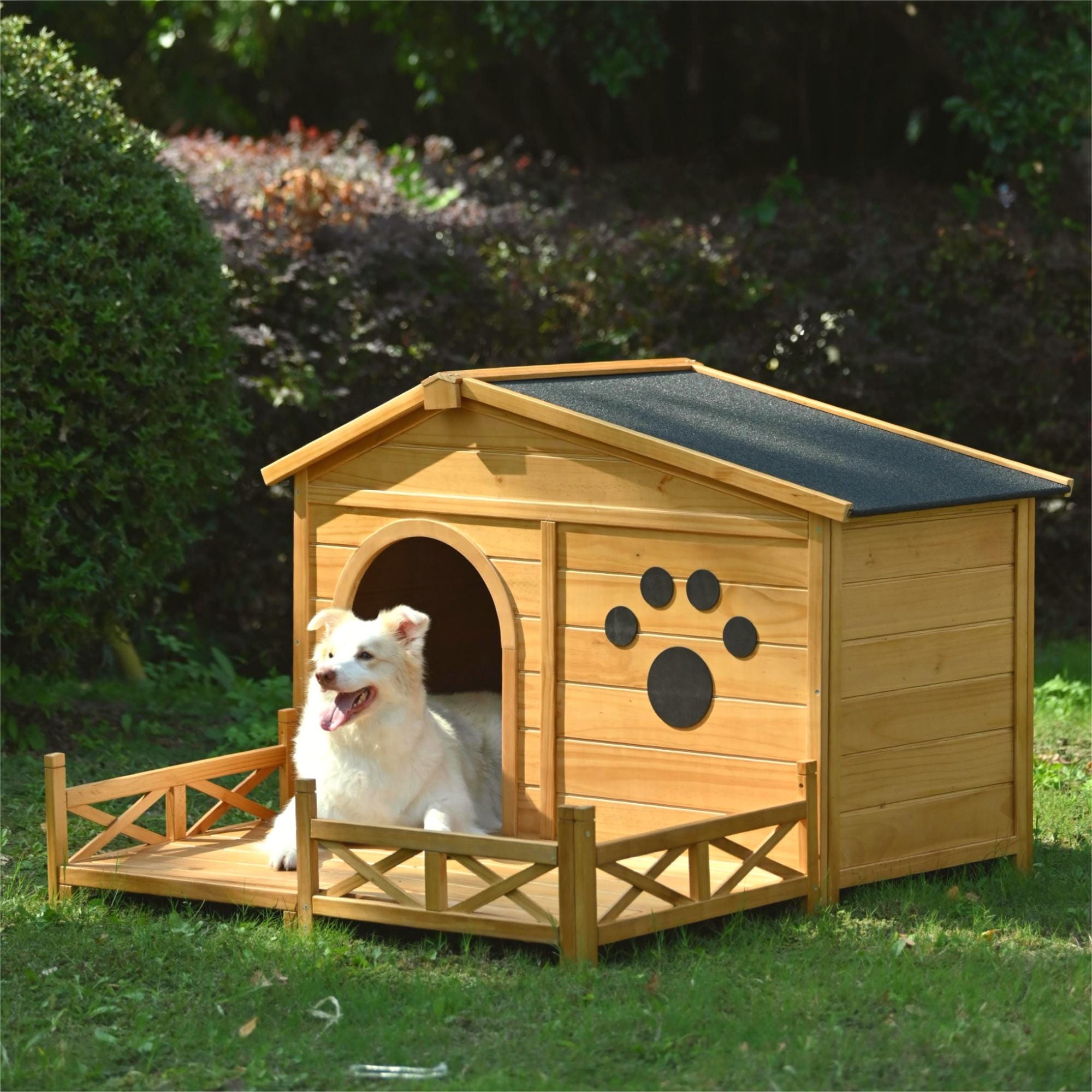
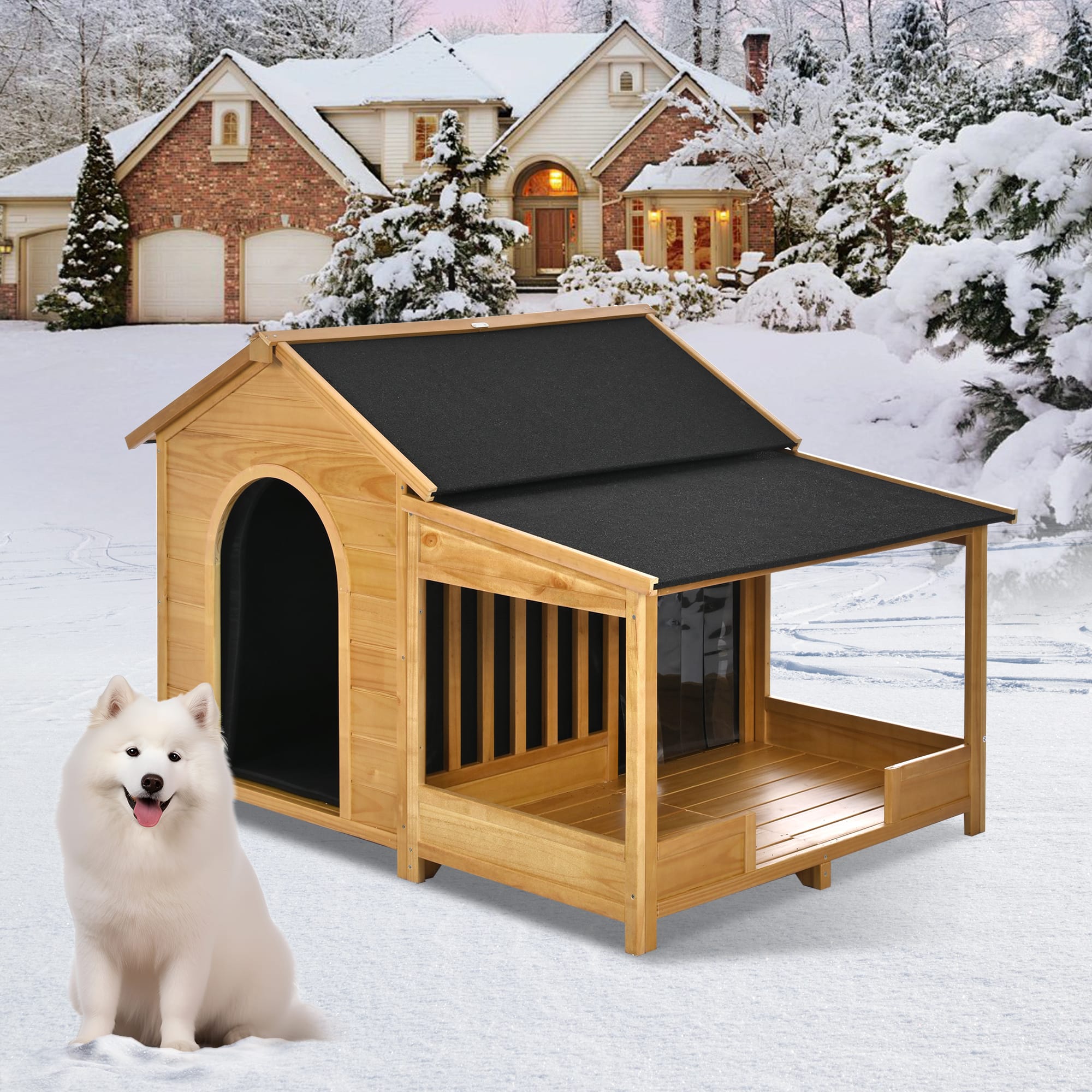
Commercially insulated houses are worth comparing too. Listings in that class advertise six-sided foam insulation and chew-resistant frames, for example the Aivituvin insulated wooden dog house and the XXL insulated wooden dog house with six-side foam. Confirm the number of insulated surfaces on the listing: two or three insulated sides is a different product from six.
Frequently Asked Questions
A molded plastic shell contributes effectively nothing in thermal resistance, so the retrofit’s value comes from the floor layer, the door flap, and dry bedding rather than from the wall material itself.
Can you insulate a plastic dog house?
Yes, and it is worth doing. Plastic shells have no useful thermal value, so fit rigid foam board to the floor and walls, cover any exposed foam, add a door flap, and set the house on a raised base. Expect the retrofit to improve dryness and wind resistance more than raw heat retention.
Does a plastic dog house get too cold in winter?
On its own, yes — a molded single-wall shell tracks outdoor temperature closely and condenses moisture inside. Insulation plus a flap plus dry bedding makes it usable for supervised winter daytime use. In below-freezing weather, veterinary guidance is to bring the dog inside rather than count on the house.
What is the best bedding for a plastic dog house in winter?
Straw or cedar shavings over an insulated floor, replaced as soon as it feels damp. Loose blankets are the common mistake: they absorb moisture and then hold it against the dog. Whatever you use, check and refresh it daily through the winter.
Should I drill a vent in a plastic dog house?
If the house already has one, keep it open; if it does not, a small vent high on the sheltered side is worth adding. A plastic house traps humidity, and trapped moisture causes the damp bedding and condensation that make a house feel colder than it measures.
Do It in This Order
Dry the shell, lift it off the ground, insulate the floor first and the walls second, hang a door flap, keep a vent open, and keep the bedding dry. If the house is too large for one dog, partition it before you buy another sheet of foam. And when the retrofit stops being worth it, the upgrade path is a wooden house with a raised floor — start with the deluxe wooden dog house or the medium wooden outdoor dog house. Every order ships free, with no minimum purchase.
Questions about sizing a house for winter, or a correction to anything above? Contact our support team through our contact page and we will reply within one business day.
