
Buy Guide
Dog Kennel End Table: How to Choose One That Fits the Room
Oct
Dog Kennel End Table: How to Choose One That Fits the Room
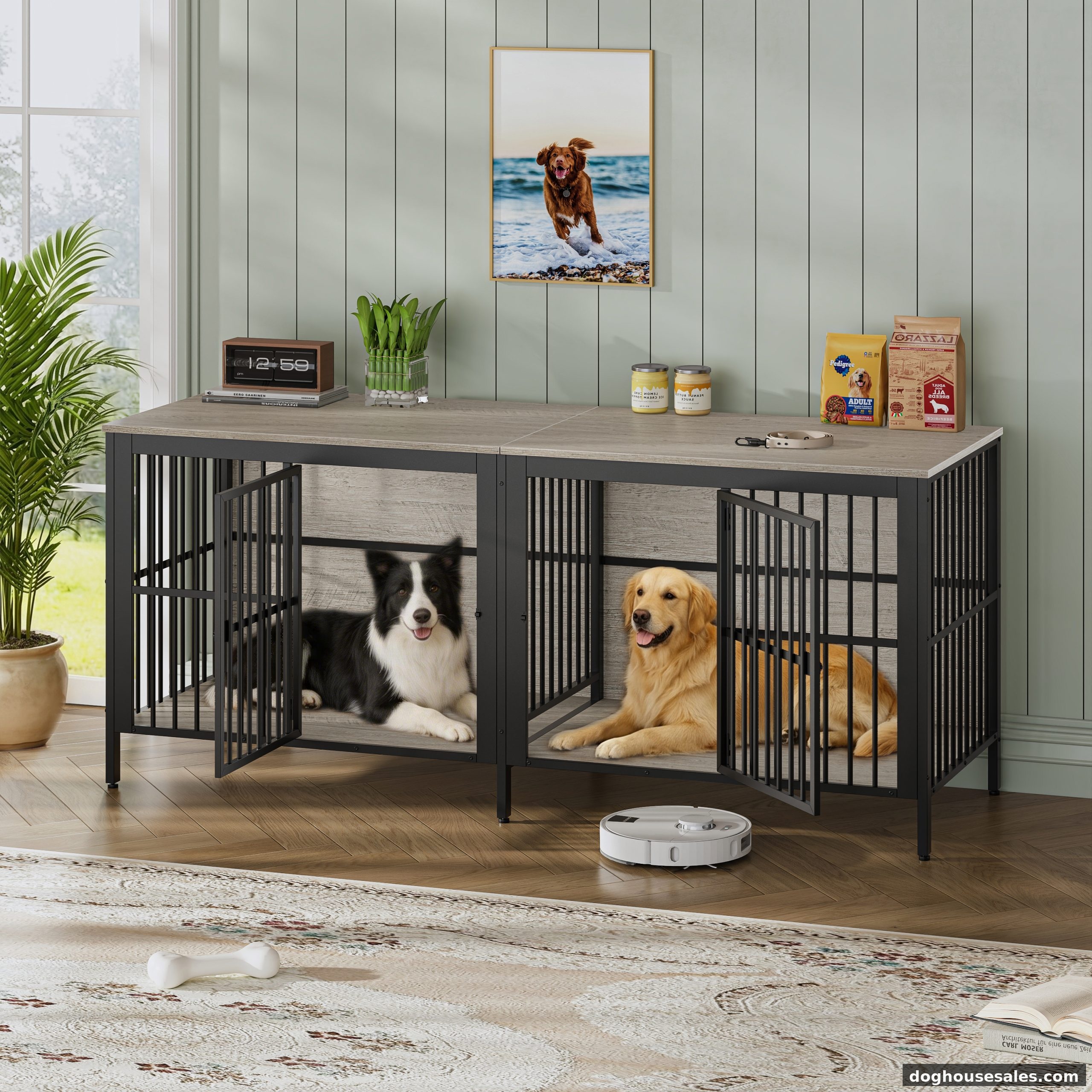
A dog kennel end table — also sold as a dog crate end table or furniture-style kennel — is a crate built into a side table, so the dog’s den doubles as the surface next to your sofa.
The crate keeps its wire or mesh enclosure, while the wooden top and panels turn it into a nightstand, sofa table, or console.
Choosing a dog kennel end table comes down to three measurements: the interior your dog needs, the height your sofa arm demands, and the load the top has to carry. Get those right and the piece disappears into the room; get them wrong and you own a crate that is too small for the dog or too short for the lamp. This guide gives you the sizing rule, a table of models by width, real top-load figures from current listings, and the fitting details that decide whether a furniture crate actually works in a living room.
Why Dog Crate Furniture Exists
A crate is a den, and a den is what a dog seeks out anyway: dogs that have no dedicated space tend to curl up under tables or behind furniture. Furniture-style crates solve two problems at once — the dog gets an enclosed, den-like spot, and the household gets a table surface instead of a piece of wire mesh in the middle of the room. The trade-offs are honest ones: the enclosure is usually smaller than a full-size metal crate for the same dog, and the wooden parts are not chew-proof, so they suit trained or calm dogs rather than determined chewers.
Match the Interior to the Dog First
The industry sizing rule for an enclosed crate is simple: the interior should be about 2–4 inches taller and longer than your dog measured standing, with enough room to stand, sit without touching the roof, turn around, and lie down flat. Petmate’s sizing guidance for kennels states the same criteria, and it is the rule to measure against before you look at finishes.
| Listed overall width | Fits one dog around | Also works as | Example from our range |
|---|---|---|---|
| 78–80 in | Large to extra-large breed, or two small dogs | Media console or bench, not a sofa-side table | 80-inch dog crate end table |
| 55 in | Large breed | Console behind a sofa | 55.1-inch heavy duty dog cage table |
| 43–47 in | Medium to medium-large breed | End table beside a deep sofa | 47-inch dog crate furniture |
| 36–38 in | Medium breed | Nightstand, side table | 38-inch heavy duty dog crate furniture |
| 31–32 in | Small to medium breed | Bedside table | 31.5-inch furniture style dog kennel |
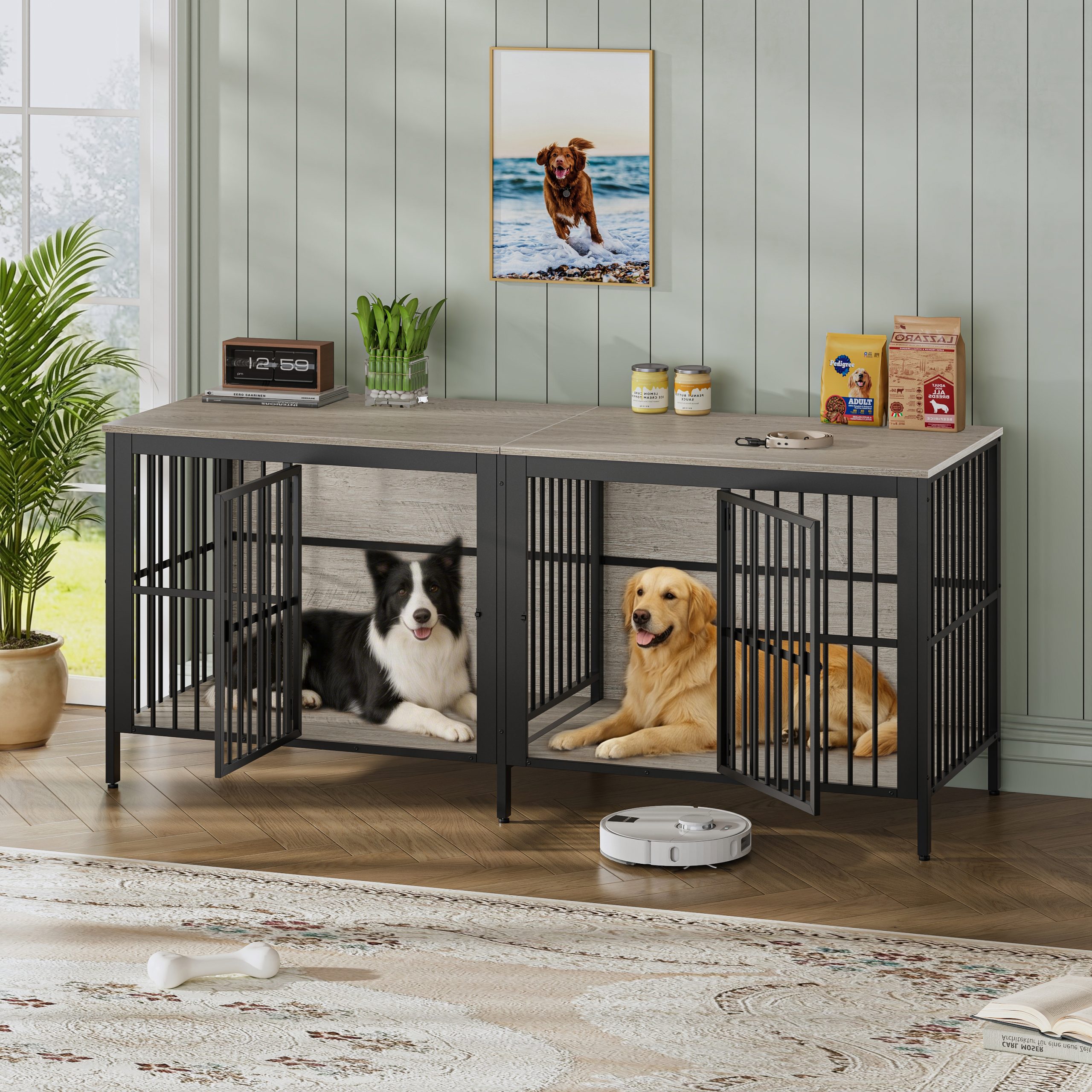
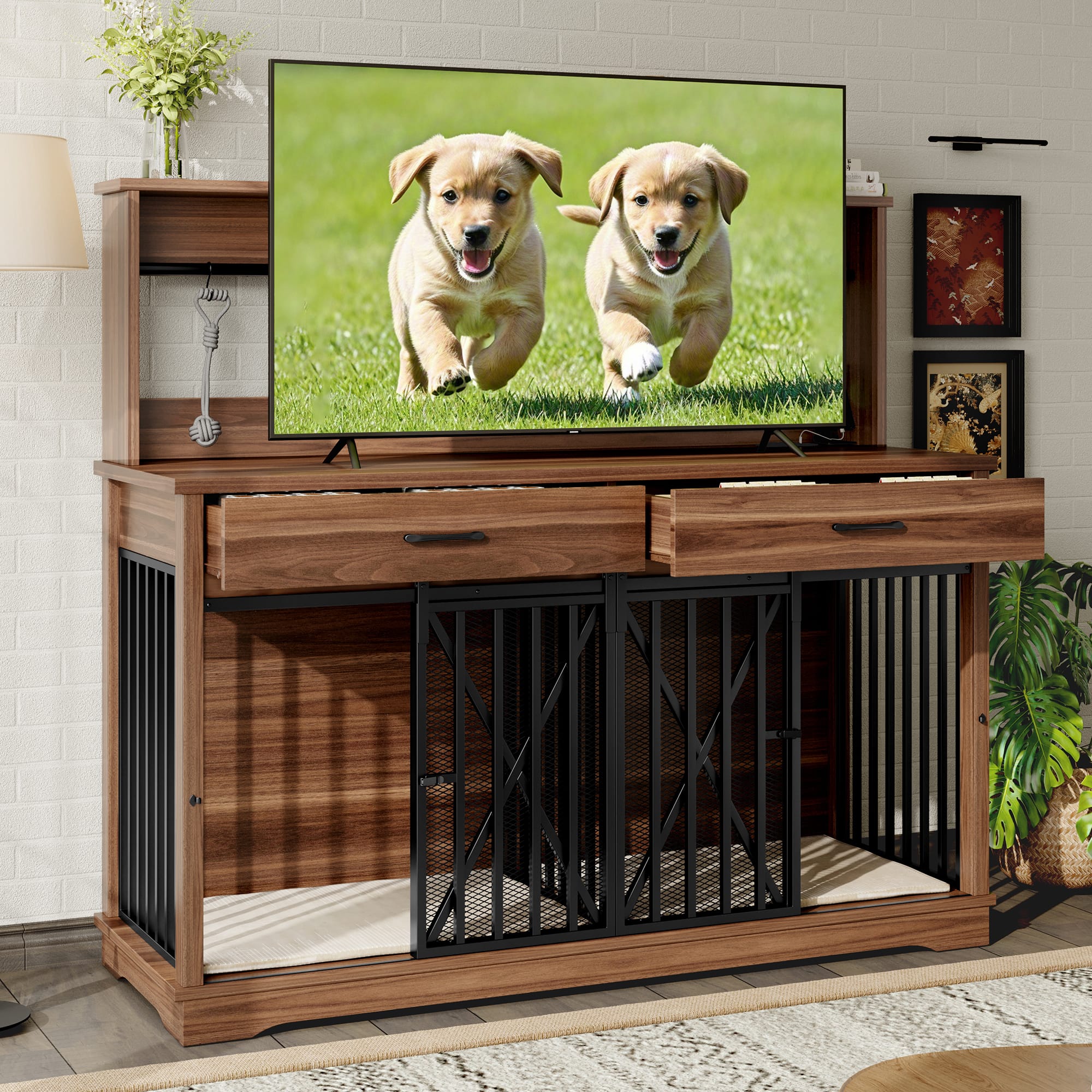
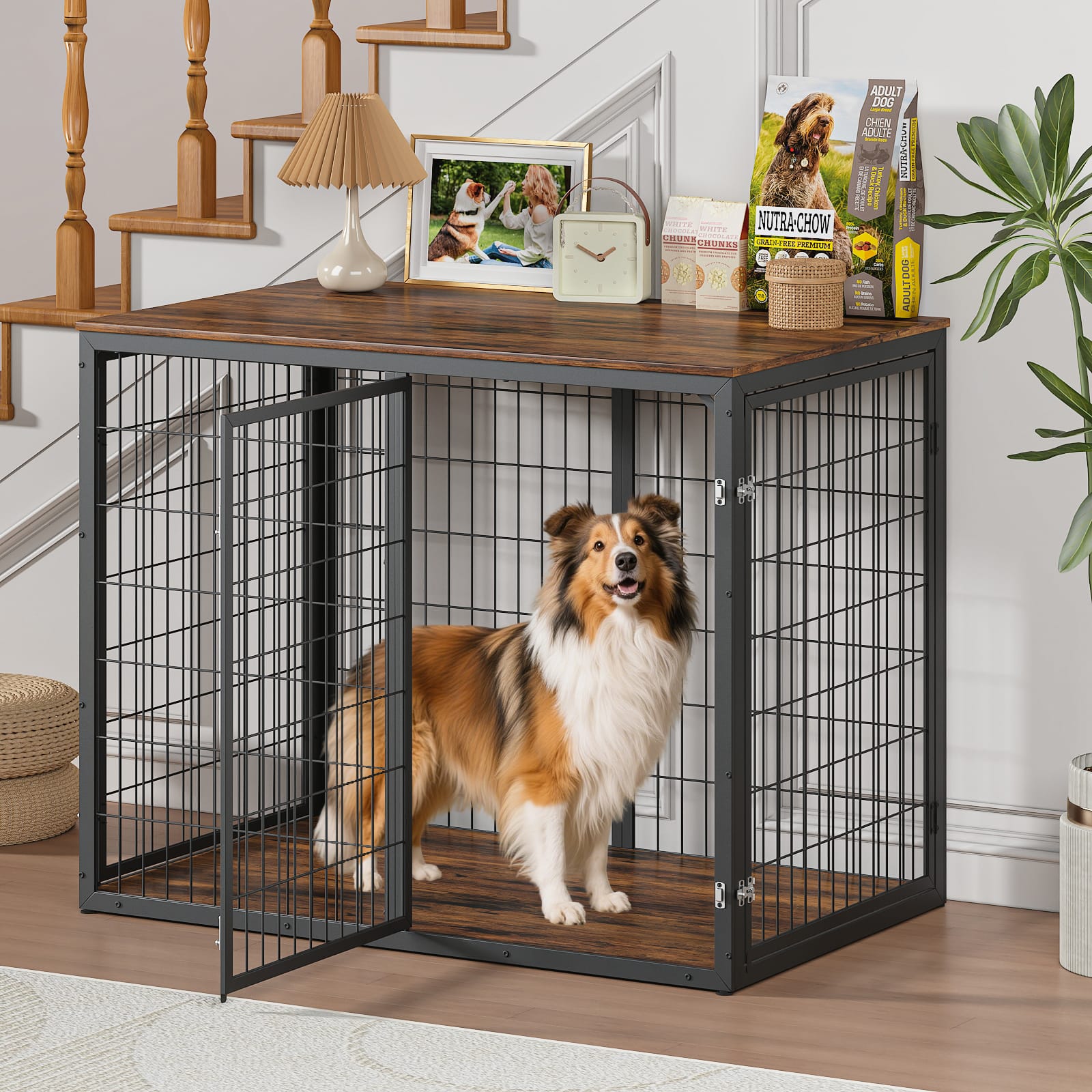
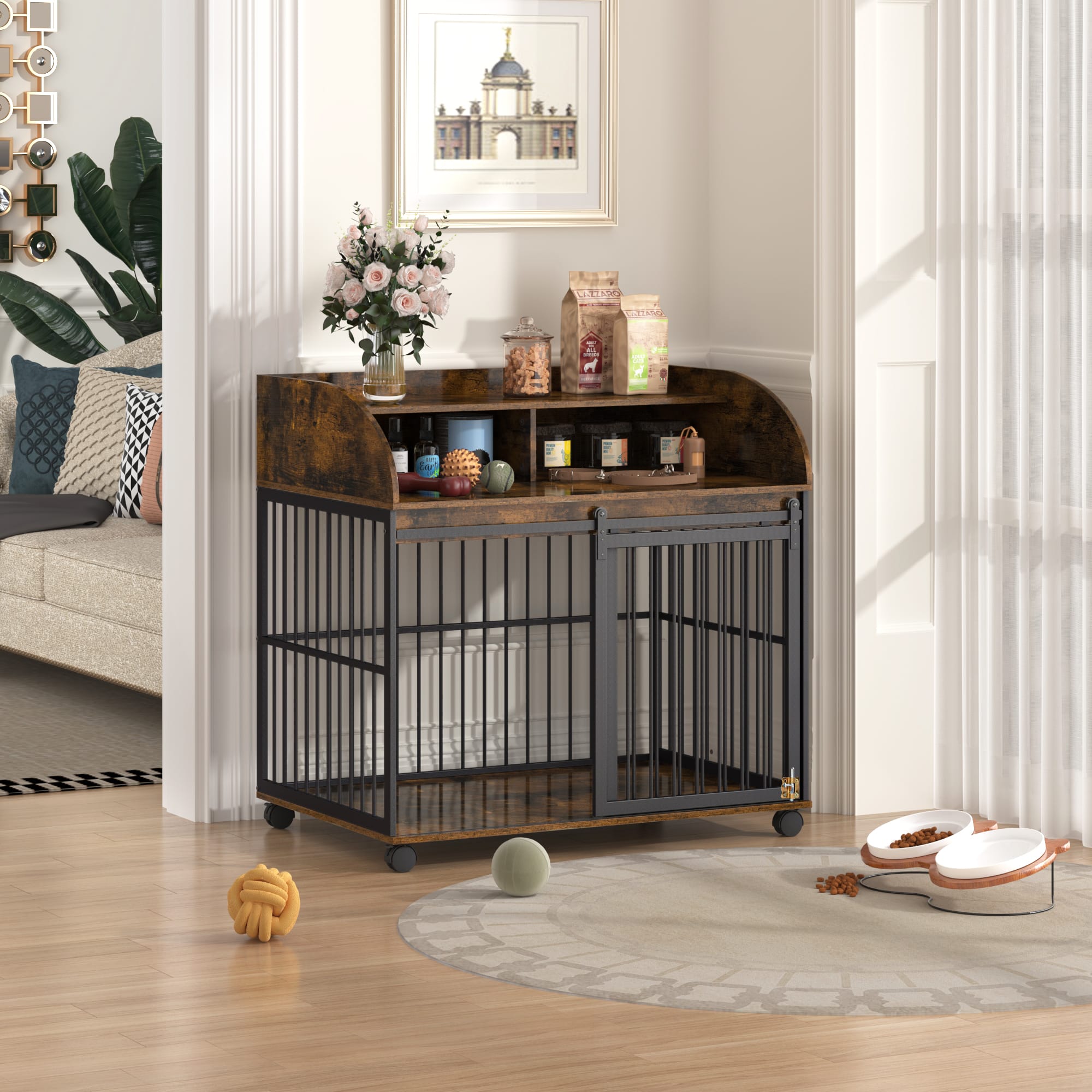
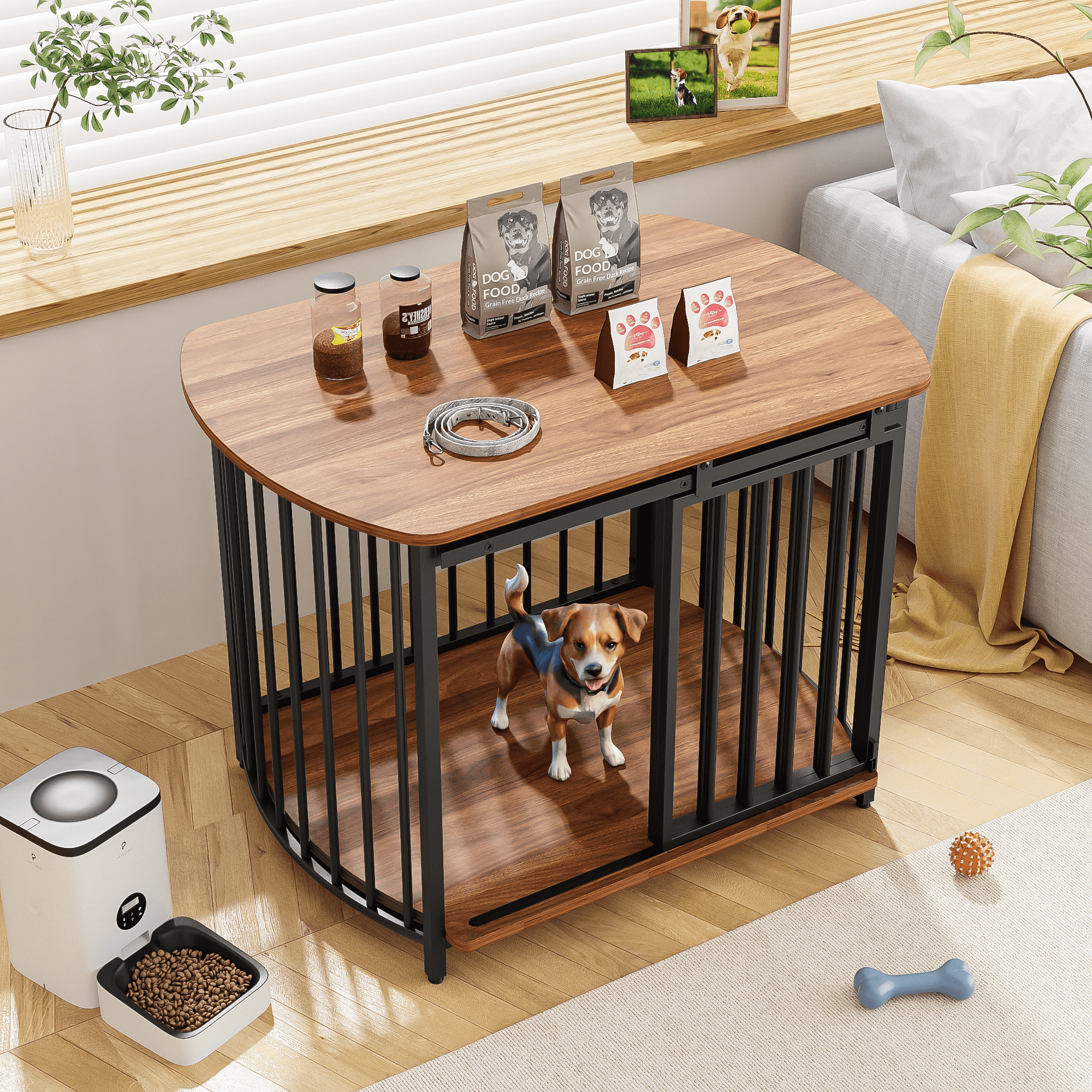
The width in a product name is the outside width of the table; the sleeping area is smaller once the panel thickness is subtracted. Check the product page’s interior dimensions — or ask us and we will measure the unit — before committing, and never buy a furniture crate for a puppy you expect to grow into it. This table is a starting point for a family of products, not a substitute for the interior figures.
Interior Dimensions and Top Load: What Listings Actually Say
Two numbers decide whether a furniture crate is practical: the interior footprint and the weight the top can carry. Current listings in this category publish both, and the spread is wide enough to matter.
Published top-load ratings in this category run from 120 lb on a small crate table to 200 lb on a 36-inch model, with a 150 lb middle tier for a mesh crate with a removable tray — the figures to compare against a lamp, a shelf of books, or a plant rather than against a television.
The sizing rule for the enclosure: interior dimensions about 2–4 inches taller and longer than the dog measured standing, so it can stand, sit without touching the roof, turn around, and lie down flat — the same criteria Petmate publishes for kennel sizing.
| Model (Amazon listing) | Overall dimensions | Interior / fit note | Top load rating |
|---|---|---|---|
| unipaws small furniture crate | 22.9 x 18.1 x 20.5 in | Small dogs and cats | 120 lb |
| unipaws 32-inch crate table | 31.9 x 22.8 x 26.0 in | Medium dogs | 150 lb |
| unipaws mesh crate with tray | 37.0 x 23.7 x 26.4 in | Interior 37 x 23 x 26 in; 25–39 lb dogs | 150 lb |
| unipaws 36-inch crate table | 36.2 x 26.5 x 31.5 in | Medium and large dogs | 200 lb |
| unipaws medium/large crate table | Listed for medium and large dogs | Same double-door design | 200 lb |
Read the top load rating as a hard limit for what you put on it as furniture — a lamp and a stack of books is fine on a 120 lb top, a 60 lb TV is not. Interior sizes published on our own product pages are worth comparing against the same standard: the interior should clear your dog by 2–4 inches in height and length, and not much more.
Height: The Measurement People Forget
An end table is furniture, so it has to line up with the sofa or bed beside it. Standard sofa arms sit around 24–28 inches, and most furniture crates land in the 20–32 inch range, which is why one model fits a living room and another does not. Measure the surface height of the furniture you are placing it against, then confirm the crate’s overall height — the 36-inch model above, for example, stands 31.5 inches tall, taller than a typical sofa arm and better suited to a chair back or a wall run.
Build Details That Decide Long-Term Use
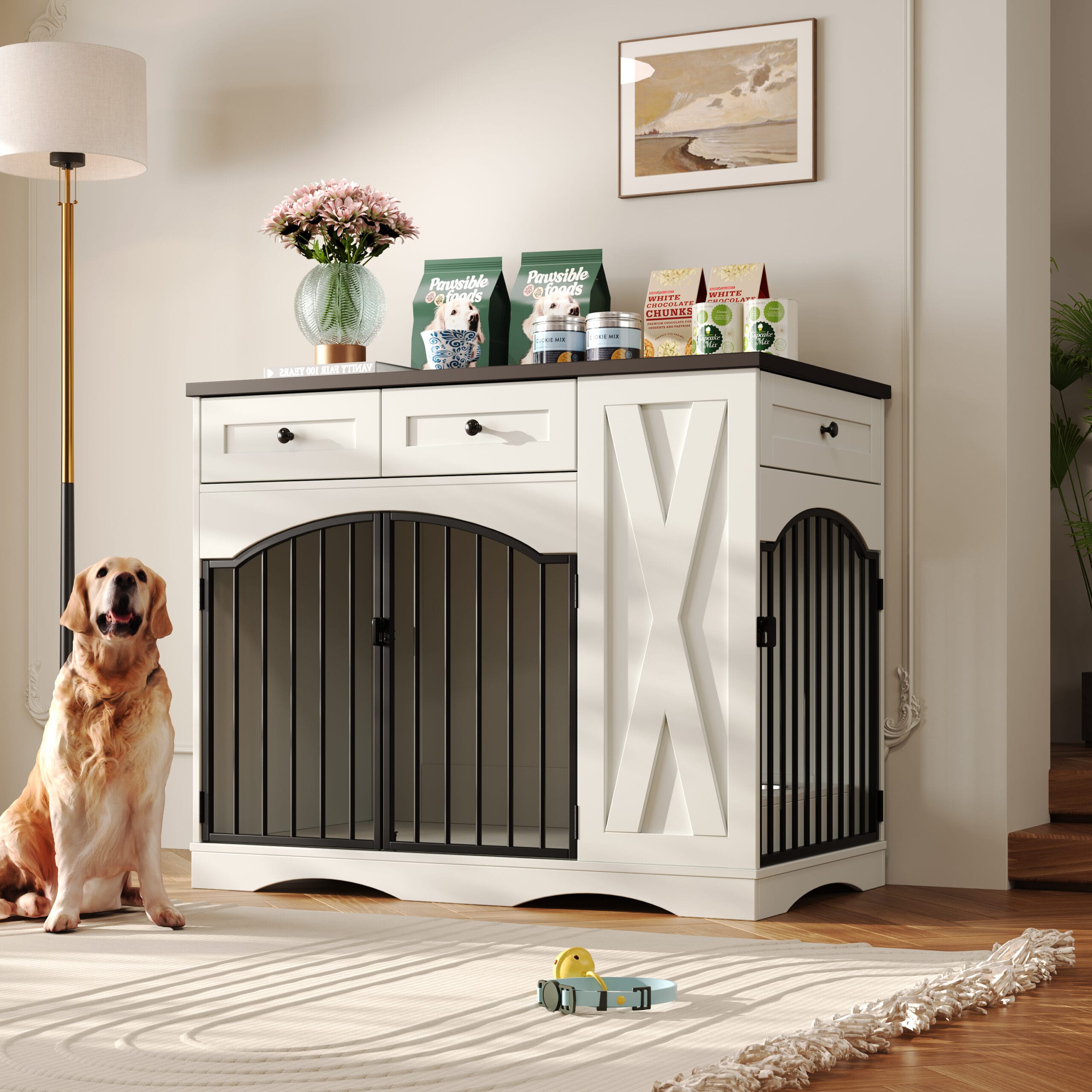
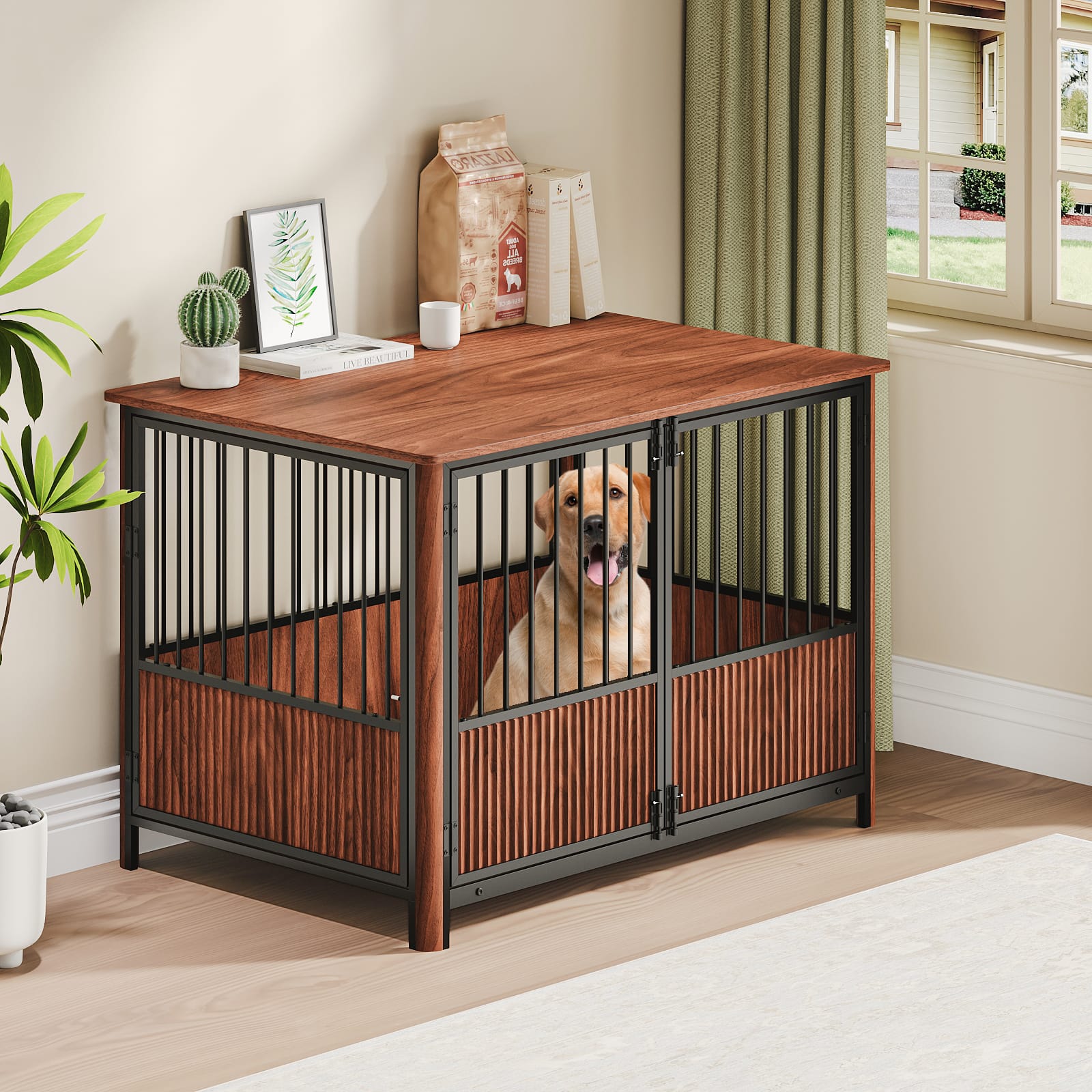
- Material: engineered wood with metal wire is the common build; solid wood and fluted or farmhouse finishes cost more and take refinishing better. Note that listings openly state pressed or engineered wood is not chew-proof — our 43-inch walnut fluted wood dog crate and 43.3-inch farmhouse dog crate are finishes to compare against that caveat rather than exceptions to it.
- Door layout: double doors, or a door on the end panel, let you place the crate without trapping the dog behind sofa legs. Check which panel the door is on before you buy.
- Tray or pan: a removable tray is the difference between a two-minute clean and a twenty-minute one on a furniture crate.
- Locks: furniture crates usually run an external latch plus internal magnets; verify the latch resists a determined paw.
- Ventilation: wire or mesh sides, not solid panels, or the den becomes a closed box.
Placement, in Practice
- Put the crate where the dog already rests — furniture crates work as dens when they sit in a family room, not in a hallway nobody uses.
- Leave the door panel accessible and facing away from foot traffic, so the dog can retreat when the room gets busy.
- Keep 2–3 inches off the wall for airflow and to stop the top rubbing marks on paint.
- Anchor a lamp or plant to the top surface rather than trusting a smooth finish to hold it.
- Add a washable mat sized to the interior; a mat that bunches up defeats the den.
Frequently Asked Questions
A furniture crate is not a chew-proof crate: listings state plainly that pressed or engineered wood will not survive a determined chewer, and solid wood builds carry the same limitation. Furniture crates suit trained or calm dogs; heavy-duty metal remains the sturdier choice for a chewer.
What is the difference between a dog kennel end table and a dog crate end table?
They are the same product under two names. “Kennel” is used more often for the furniture-styled pieces with wood panels, “crate” for wire crates with a tabletop. When shopping, search both terms plus “furniture-style crate” and “crate table” to see the full field.
How do I know what size dog a furniture crate fits?
Measure your dog standing — nose to tail base for length, floor to head for height — then add 2–4 inches for the interior. Compare that against the crate’s interior dimensions, not its outside width. A furniture crate for a large breed needs about 36 inches of interior length.
Can a dog crate end table hold a TV or a heavy lamp?
Check the published top load. Current listings rate tops at 120 lb for a small crate and 200 lb for a large one, which comfortably covers a lamp, books, or a plant. A television is risky: the weight is fine on a 200 lb top, but the vibration and heat are not what these tables are designed around.
Are wooden crate tables chew-proof?
No. Listings state plainly that engineered or pressed wood is not chew-proof, and the same applies to solid wood builds. Furniture crates suit dogs that are trained or calm in a crate; for a determined chewer, a heavy-duty metal crate is the sturdier choice and can still be used behind a table.
Where to Start
Measure the dog, measure the furniture you are placing it against, then pick the model that satisfies both. From our range, the 47-inch dog crate furniture covers the common medium-large living-room case, the 80-inch dog crate end table handles a large breed or a console run, and the 38-inch heavy duty dog crate furniture is the nightstand-sized option. Every order ships free, with no minimum purchase, and if you send us your dog’s measurements we will check the fit before you order.
Questions on dimensions, finishes, or assembly? Contact our support team and we will reply within one business day.
