
Buy Guide
Casual Home Pet Crate End Table: Sizes, Wood, and Real Fit
Oct
Casual Home Pet Crate End Table: Sizes, Wood, and Real Fit
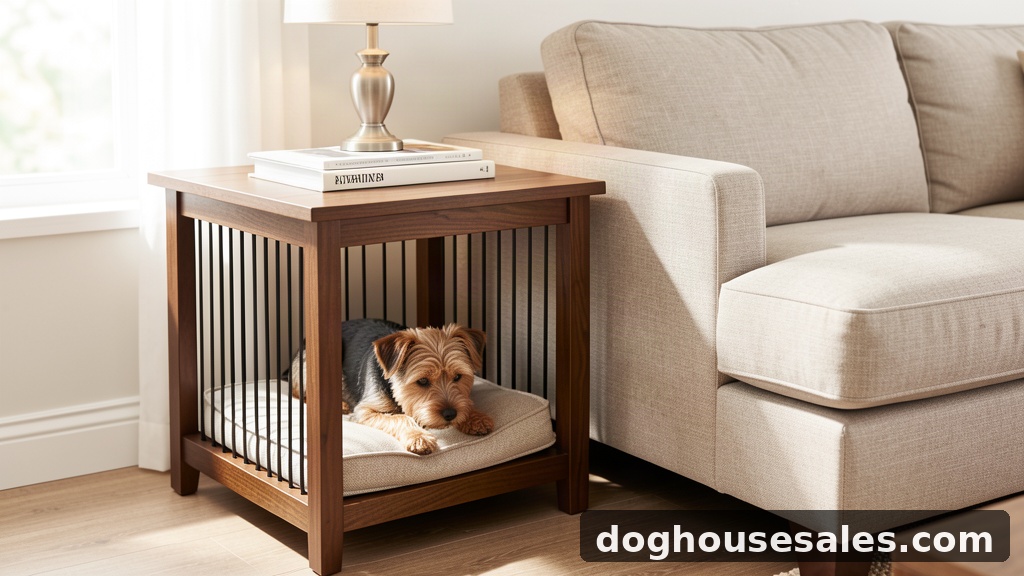
Definition: The Casual Home pet crate end table is a wooden furniture-style dog crate built to sit beside a sofa or bed, with a flat top that works as a side table and a latched front gate for the dog. It comes in three sizes and several finishes.
If you are shopping a Casual Home pet crate end table, the decision is not really about the finish. It is about whether the interior box is big enough for your dog to stand and turn, and whether the wood will hold up to the dog you actually own. Those two questions decide most of the owner complaints you will read afterward. This guide gives you the published dimensions, what the “solid wood” claim means across the brand’s model lines, and where the crate stops being the right tool.
What the Casual Home line actually contains
Casual Home sells more than one product under this name, and the listings do not describe them identically. The Modern Lattice model is listed as solid pine with MDF on the front and back panels. A separate “Pet Crate End Table, rich color options” line is described by the manufacturer as 100% solid wood. A third listing on Chewy says “100% real solid wood,” while a customer-service answer on the same page reportedly clarifies that the bars, frame, and top are solid wood and the flat panels are a composite material.
That difference matters more than it sounds. A panel that is MDF or composite is the part a determined dog paws, scratches, and chews. It is also the part that shows water damage if a bowl tips inside the crate. Before you order, confirm the exact model number and finish, because the material spec travels with the model, not with the brand name.
Casual Home pet crate end table sizes and interior space
Every listing quotes exterior dimensions, but your dog only experiences the interior. On this product the gap between the two is roughly 3 inches in length, 2 to 3 inches in width, and 3 inches in height. Published figures below are length x width x height.
| Size | Exterior (in) | Interior (in) | Recommended dog weight |
|---|---|---|---|
| Small | 27.5 x 20 x 24 | 24.5 x 17 x 21 | Under 25 lb |
| Medium / Large | 36.5 x 24 x 29.25 | 33 x 21 x 26 | Usually listed 25-40 lb |
| Extra large | 44.5 x 31.5 x 30 | 41.5 x 29.5 x 27 | 40-90 lb |
The weight ranges are the manufacturer’s pet-size guidance, not a structural rating. One retailer listing for a large model separately quotes a 120 lb weight capacity, and the listing does not make clear whether that figure describes the tabletop load, the crate’s structural limit, or something else. Do not read a 90 lb dog recommendation as permission to park 90 lb on the top.
Published interior dimensions for the medium/large Casual Home crate are 33 x 21 x 26 inches against a 36.5 x 24 x 29.25 inch exterior, so roughly 3 inches of every dimension is frame, panel, and top thickness rather than usable space.
The 4-inch rule that decides your size
Measure your dog standing, not curled up. Take nose to tail base for length, and floor to the top of the head for height. Then add about 4 inches to each measurement and compare the result with the interior column above, not the exterior one. A dog should be able to stand upright and turn around without ducking.
- Measure length from nose to tail base, and height from floor to the top of the head while standing.
- Add 4 inches to both numbers.
- Compare against the interior dimensions of the size you are considering.
- Measure the floor space where the table will sit, including clearance for the gate to swing open.
- If your dog is within an inch or two of the interior limit, size up or choose a different crate.
That last step is where most returns start. A 22 lb dog is inside the small model’s 25 lb guidance, yet 24.5 inches of interior length minus a 4-inch allowance leaves 20.5 inches of dog, which is a tight fit for anything longer than a compact terrier.
What owners report after a few months
The complaints on this product cluster tightly, and they are worth reading before the good reviews. Reviewers describe dogs chewing through or loosening the lattice slats. One Chewy reviewer reported a 22 lb beagle damaging the lattice during a 45-minute absence, and another described a dog escaping after the slats came loose.
Assembly complaints are the second cluster: misaligned holes, a door that scrapes or is hard to latch, wobble once built, and hinges or latches that feel weak. If a door binds during assembly, forcing it does not fix the alignment, and the latch is the only thing keeping the dog in. The third cluster is finish wear, including scratches and dents from normal furniture use.
Owner reports on the Casual Home crate consistently describe it as a decorative enclosure for a calm, crate-trained dog, not an escape-proof kennel for a chewer, a panicking dog, or a dog left alone for long stretches.
None of that is a controlled safety test. It is a consistent pattern across review pages, and it tells you which dog this crate suits: one already comfortable in a crate, who settles instead of working at the door.
What the manufacturer does not publish
The product pages give dimensions, materials, assembly notes, and finishes. They do not identify a published ASTM, ANSI, or other product-performance standard, and no test report or certification appears on the listings reviewed. Solid-wood marketing language is not a substitute for a test result, and it should not be read as one.
If those details decide your purchase, ask Casual Home in writing for three things: whether the panels are MDF or solid wood on the exact model you are buying, the maximum load on the top, and any applicable test standard or certification. A written answer is the only version of that claim you can hold them to.
Where this crate fits, and where it does not
Buy the Casual Home crate if the furniture look is the point: it sits at sofa height, holds a lamp or a drink, and disappears into the room instead of announcing itself as a dog cage. It also works if your dog is already crate-trained, sleeps through the night in it, and does not test the door. In that role it does exactly what it was designed for.
Choose something sturdier if your dog chews, digs at the latch, or panics when confined. For that dog, a heavier bar crate with a solid latch is the honest recommendation, and the end table becomes a piece of furniture the dog is not left in. If you want the furniture form with more structure, our 80-inch dog crate end table and the 47-inch dog crate furniture are built as furniture first with a heavier frame, and our dog crate furniture collection lists the full range with dimensions on each page.
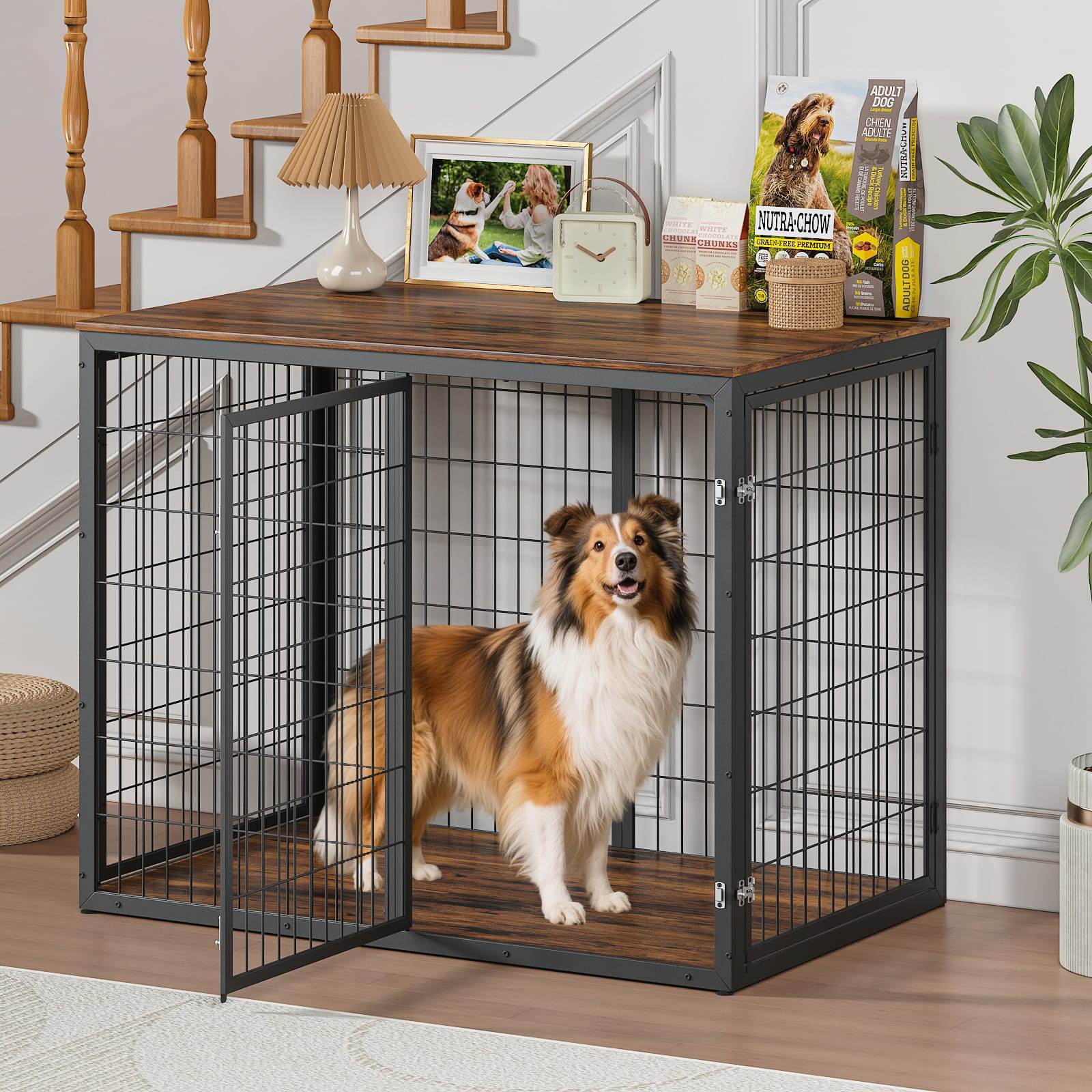
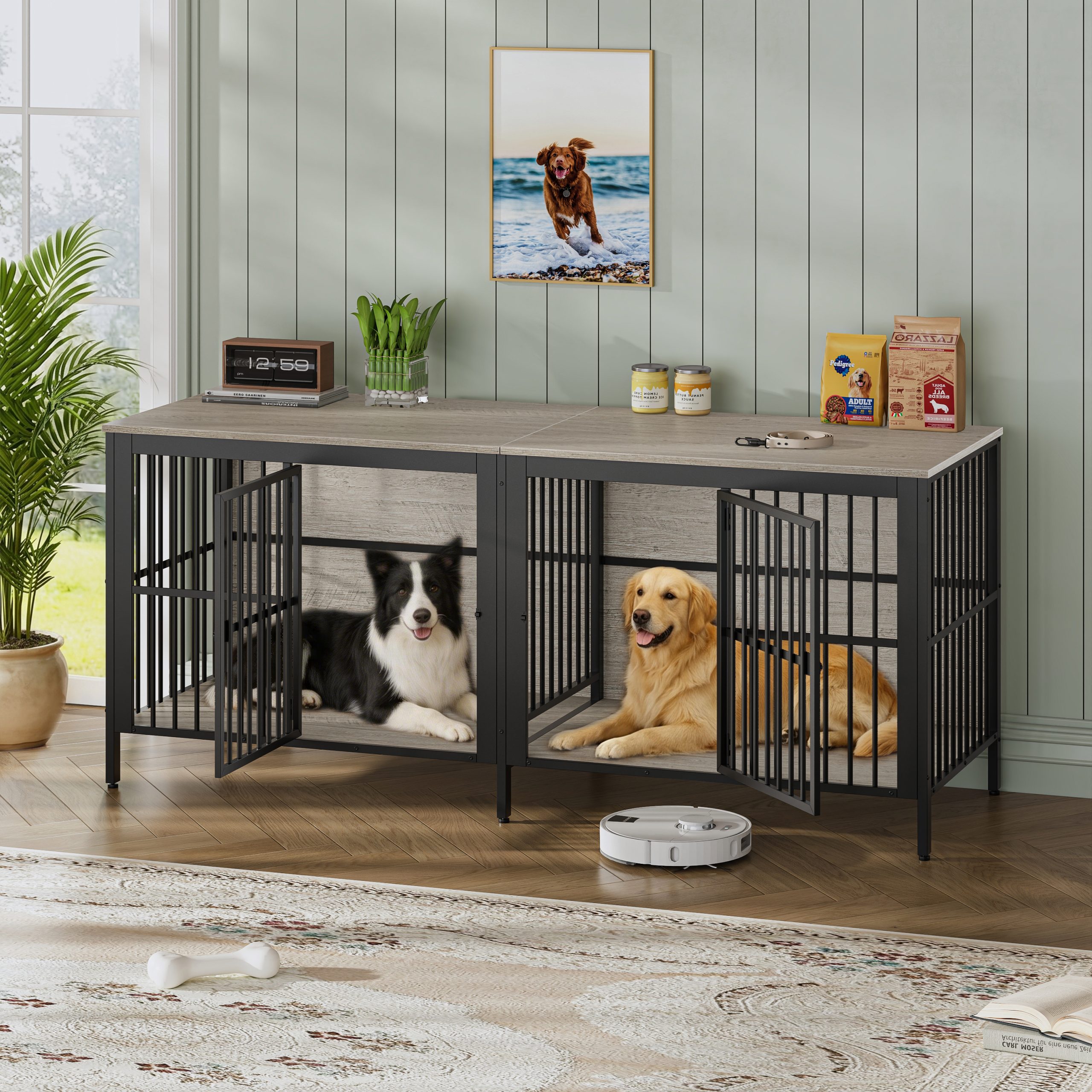
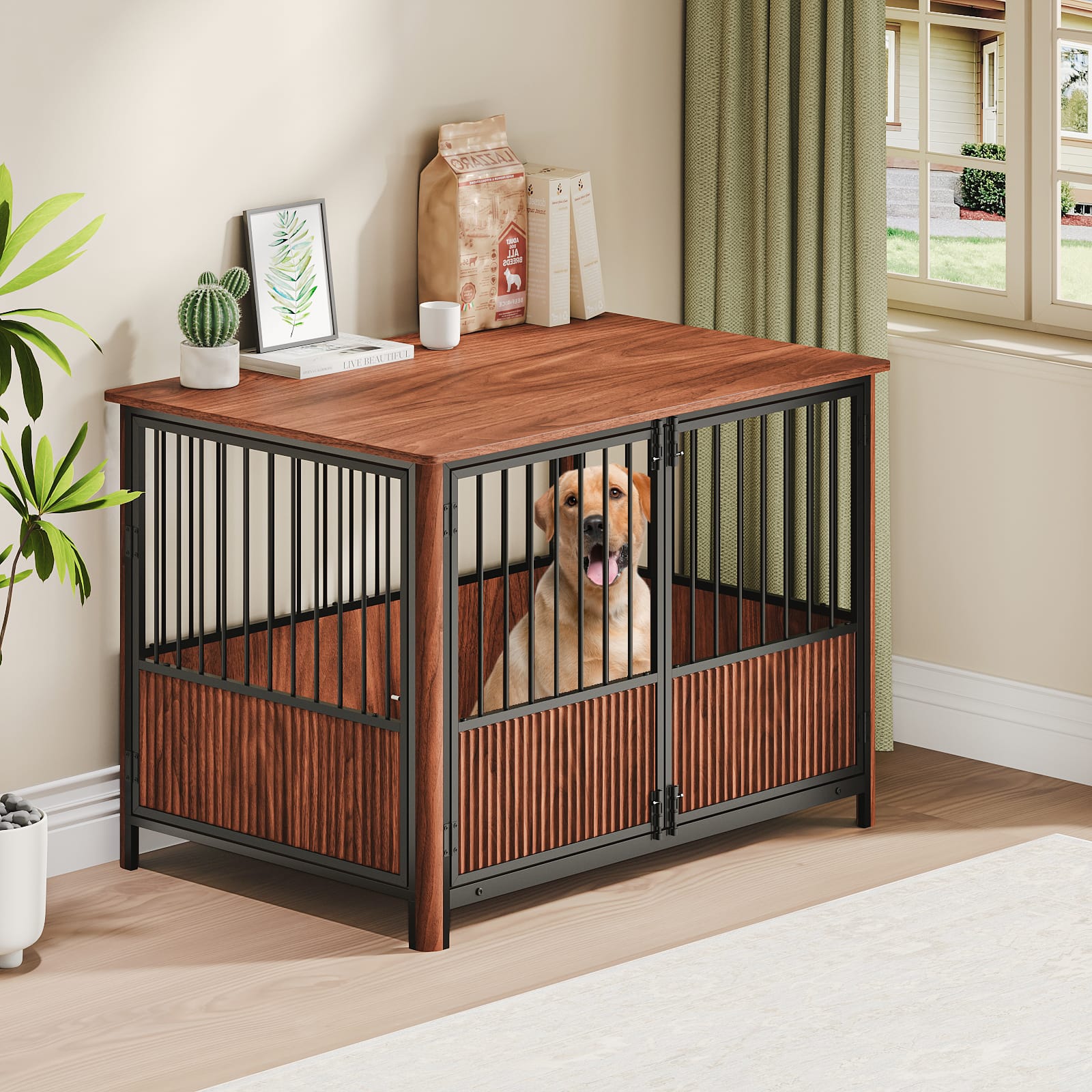
If you are still deciding whether furniture-style crates earn their floor space at all, read our guide to choosing a dog kennel end table that fits the room, and the honest cost-benefit piece on whether dog house end tables are worth it. For a walnut finish that reads more mid-century, the 43-inch walnut fluted wood dog crate is the closest match in our own range.
Two models worth comparing directly
The brand’s own two most-reviewed forms are the lattice version in espresso and the plain-panel end table in white. Both are sold through Amazon with the same latch-and-top concept, and the difference is largely the panel style and the finish that has to survive your living room.
The Casual Home Modern Lattice Wooden Pet Crate End Table carries the lattice front that reviewers most often describe as the weak point with a determined dog. The Casual Home 600-41 Wooden Pet Crate End Table is the 27.5-inch white model with a solid-panel front, sized for pets up to 25 lb. If your dog is at the top of that range, measure before ordering rather than trusting the label.
Shop casual home pet crate end table by size and build
These collections are grouped the way buyers actually narrow down this choice, so the specs you need are one click apart.
Frequently asked questions
What sizes does the Casual Home pet crate end table come in?
Three: small at 27.5 x 20 x 24 inches exterior, medium/large at 36.5 x 24 x 29.25 inches, and an extra-large model at 44.5 x 31.5 x 30 inches. Interior space is about 3 inches smaller in every dimension, which is the figure that decides whether your dog fits.
Is the Casual Home pet crate end table real solid wood?
It depends on the model. The Modern Lattice version is listed as solid pine with MDF front and back panels, while the rich-color end table line is described as 100% solid wood. A Chewy customer-service answer on a third listing says the bars, frame, and top are solid wood and the flat panels are composite.
How much weight can the top of the crate hold?
Casual Home does not publish a tabletop load rating. One retailer listing quotes a 120 lb capacity without specifying whether it refers to the top or the crate structure. Ask the manufacturer in writing before putting anything heavy on it, and never confuse the dog’s weight range with the top’s capacity.
Is the crate escape-proof for a dog that chews?
Owner reports say no. Reviewers describe lattice slats being chewed loose, a 22 lb beagle damaging the lattice in 45 minutes, and dogs escaping once slats came free. For a chewer or a dog that panics when confined, a heavier bar crate with a solid latch is the safer choice.
What size fits a 35 lb dog?
A 35 lb dog usually falls in the medium/large model’s 25-40 lb guidance, but weight is a proxy. Measure nose to tail base and floor to head, add 4 inches to each, and confirm the result fits inside 33 x 21 x 26 inches. A tall, long dog can outgrow a weight range before it outgrows the number.
{“@context”:”https://schema.org”,”@type”:”FAQPage”,”mainEntity”:[{“@type”:”Question”,”name”:”What sizes does the Casual Home pet crate end table come in?”,”acceptedAnswer”:{“@type”:”Answer”,”text”:”Three: small at 27.5 x 20 x 24 inches exterior, medium/large at 36.5 x 24 x 29.25 inches, and an extra-large model at 44.5 x 31.5 x 30 inches. Interior space is about 3 inches smaller in every dimension, which is the figure that decides whether your dog fits.”}},{“@type”:”Question”,”name”:”Is the Casual Home pet crate end table real solid wood?”,”acceptedAnswer”:{“@type”:”Answer”,”text”:”It depends on the model. The Modern Lattice version is listed as solid pine with MDF front and back panels, while the rich-color end table line is described as 100% solid wood. A Chewy customer-service answer on a third listing says the bars, frame, and top are solid wood and the flat panels are composite.”}},{“@type”:”Question”,”name”:”How much weight can the top of the crate hold?”,”acceptedAnswer”:{“@type”:”Answer”,”text”:”Casual Home does not publish a tabletop load rating. One retailer listing quotes a 120 lb capacity without specifying whether it refers to the top or the crate structure. Ask the manufacturer in writing before putting anything heavy on it, and never confuse the dog’s weight range with the top’s capacity.”}},{“@type”:”Question”,”name”:”Is the crate escape-proof for a dog that chews?”,”acceptedAnswer”:{“@type”:”Answer”,”text”:”Owner reports say no. Reviewers describe lattice slats being chewed loose, a 22 lb beagle damaging the lattice in 45 minutes, and dogs escaping once slats came free. For a chewer or a dog that panics when confined, a heavier bar crate with a solid latch is the safer choice.”}},{“@type”:”Question”,”name”:”What size fits a 35 lb dog?”,”acceptedAnswer”:{“@type”:”Answer”,”text”:”A 35 lb dog usually falls in the medium/large model’s 25-40 lb guidance, but weight is a proxy. Measure nose to tail base and floor to head, add 4 inches to each, and confirm the result fits inside 33 x 21 x 26 inches. A tall, long dog can outgrow a weight range before it outgrows the number.”}}]}The short version
The Casual Home pet crate end table is a good-looking, lightweight furniture crate for a calm dog that already sleeps in a crate, and it is not a kennel for a chewer. Buy it on interior dimensions, confirm the panel material for the exact model, and expect to do a careful assembly rather than a fast one. If any of those three checks fails, the sturdier crate in our side table collection is the better use of the same floor space.
